Vienna Hofburg Treasury: Where to See the Holy Lance Today
If you plan to view the legendary Holy Lance in person, your destination is the Imperial Treasury inside the Hofburg Palace in Vienna, Austria. This comprehensive visitor guide explores how to see the artifact, what scientific testing has uncovered about its physical composition, and its remarkable journey back to the Austrian capital after World War II.
Key Takeaways
- The Holy Lance is permanently housed in the Imperial Treasury at the Hofburg Palace in Vienna, Austria.
- Modern metallurgical testing in 2003 revealed that the outer blade dates to the 7th century, while components like the embedded nail show complex age profiles.
- Visitors to the Hofburg Treasury can view the complete Imperial Regalia, including the crown, orb, and sword.
- The artifact survived centuries of European conflict, Allied bombing, and clandestine operations before returning to Vienna in 1946.
Planning Your Visit to the Hofburg Treasury
Located in the heart of Vienna, the Hofburg Palace served as the winter residence of the Habsburg dynasty for centuries. Today, its sacred rooms house some of the most politically and spiritually significant treasures in European history. Finding the artifact requires navigating the Imperial Treasury, locally known as the Kaiserliche Schatzkammer, which is divided into two main sections: the secular treasury and the ecclesiastical treasury.
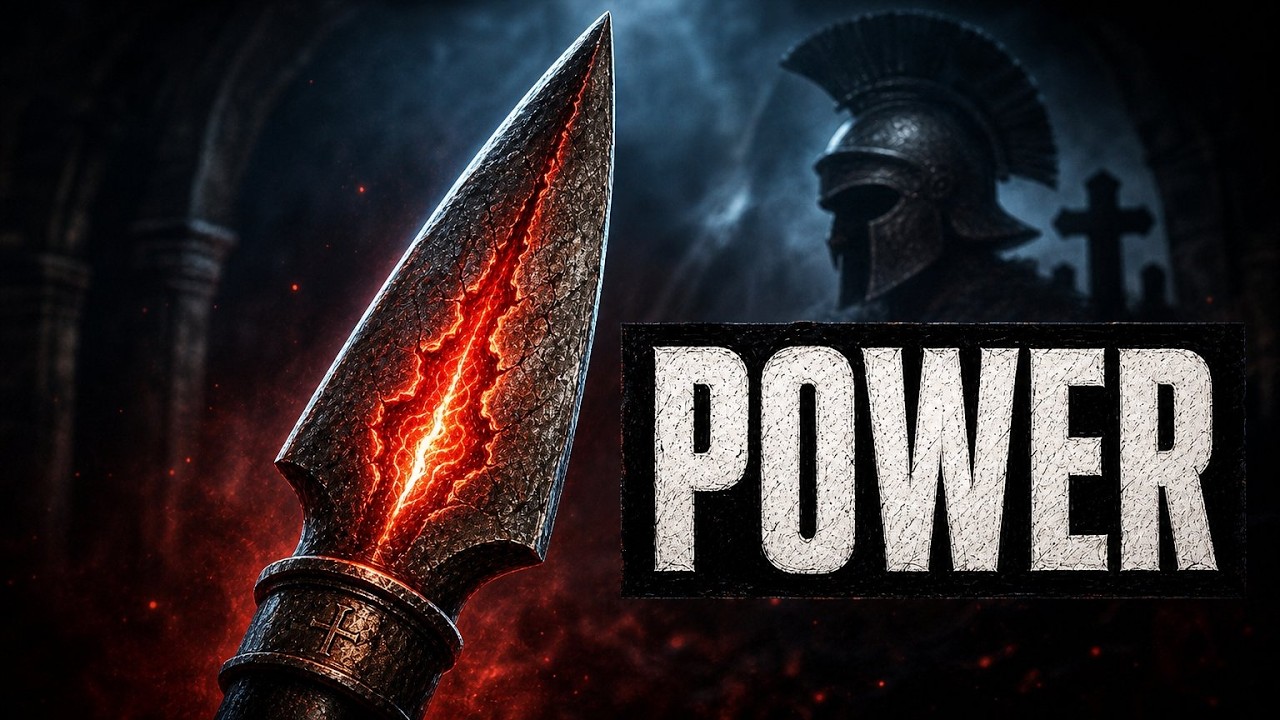
The Holy Lance rests within the collection of the Imperial Regalia. Walking through the dimly lit exhibition halls, visitors encounter the artifact behind specialized secure glass, accompanied by the imperial crown, scepter, orb, and ceremonial swords. The display highlights the dark iron blade with its distinctive central reinforcing strips and the small nail bound into its core by bands of gold and silver. While millions of tourists visit the Hofburg complex annually for its imperial apartments and museums, the treasury offers a much quieter, more contemplative atmosphere for those fascinated by medieval history and unverified relics.
What Modern Science Says About the Blade
For centuries, the aura of the Holy Lance rested entirely on faith, political myth, and the chilling prophecies associated with its previous owners. However, modern analytical techniques finally caught up with the legend in 2003, when researchers received unprecedented permission to remove the securing bands of gold and silver and examine the metal directly.
Metallurgical testing yielded fascinating results that bridged the gap between medieval folklore and hard archaeology. The main iron blade of the spearhead was dated to roughly the 7th century AD. This scientific finding places the forging of the visible iron hundreds of years after the crucifixion of Jesus of Nazareth, effectively ruling out the possibility that this specific piece of steel was hammered out in the first century.
Yet, the mystery did not end there. At the core of the blade sits an iron nail, traditionally believed to be one of the original instruments of the Passion. Initial microscopic and dimensional examinations noted that its length and shape aligned closely with authentic Roman nails from the first century. Subsequent independent analyses offered differing datings, demonstrating that even advanced laboratories cannot fully untangle the tangled web of repair, re-forging, and veneration that defines the object. To this day, metallurgists and historians continue to debate the exact age of its internal components.
The Turbulent Journey Back to Vienna
The presence of the Holy Lance in Vienna is not an unbroken, peaceful residency. Over its long history, the artifact has been seized, hidden, and transported across borders during times of extreme geopolitical upheaval. When Napoleon swept across Europe in the early 19th century, dissolving the Holy Roman Empire, the Habsburg administrators hastily moved the regalia out of Nuremberg to keep it out of French hands, establishing Vienna as its new home in 1804.
The most dramatic chapter of its modern history unfolded in the 20th century. Following the 1938 Anschluss, Adolf Hitler ordered the regalia transferred back to Nuremberg as a propaganda tool for the Third Reich, seeking to legitimize his regime through the ancient symbolism of the first Reich. As Allied bombs began to flatten Nuremberg toward the end of World War II, Nazi officials sealed the lance, crown, and orb behind a newly constructed masonry wall eighty feet underground in an art bunker beneath Nuremberg Castle.
After the fall of the city, a German-born American art historian tracked down the hiding spot using information extracted from local officials who had previously claimed the treasure was sunk in an Austrian lake. On August 7, 1945, the secret wall was breached, revealing the pristine artifacts resting safely below the ruined city. On January 4, 1946, an American military transport aircraft flew the entire collection back to Vienna, returning the Holy Lance to the exact display cases it occupies today.
Conclusion
Whether viewed as a masterpiece of medieval smithing, a political talisman of fallen empires, or an object of deep spiritual devotion, the Holy Lance remains one of history's most compelling artifacts. Standing before its display case in the Vienna Hofburg Treasury offers a tangible connection to centuries of human ambition, war, and mystery.
To dive deeper into the chilling prophecies, the crusade in Antioch, and the dark ambitions that followed this legendary relic, Listen to the full episode of Midnight Signals. Join host Russ Chamberlin as he explores the shadows of history and uncovers the stories that defy explanation.
Frequently Asked Questions
What is the best time to visit the Imperial Treasury in Vienna?
Visiting early in the morning right when the museum opens typically offers a quieter experience, allowing you to view the Holy Lance and the Imperial Regalia without large crowds.
Are there guided tours available for the Holy Lance exhibit?
Yes, the Hofburg Treasury provides audio guides in multiple languages, and private guided tours can often be booked through the museum to gain deeper insights into the Habsburg crown jewels.
How long does it take to see the Imperial Treasury?
Most visitors spend between one to two hours exploring the various rooms of the treasury, which house ecclesiastical vestments, baptismal sets, and secular imperial treasures alongside the regalia.
Is the Holy Lance the only spearhead claimed to be authentic?
No, throughout Christian history, multiple relics have laid claim to being the Holy Lance, including notable examples kept in Rome, Krakow, and Armenia, but the Vienna specimen is the one most closely tied to the Holy Roman Empire and its imperial legends.