The Lost City of Z: The Vanishing of Percy Fawcett


Key Takeaways
- In 1925, decorated British officer and experienced explorer Percy Fawcett vanished into the Amazon rainforest while searching for a mysterious lost settlement known as 'City Z.'
- Fawcett based his expedition on Manuscript 512, a 1753 Portuguese document detailing an abandoned city featuring Roman-style arches, obelisks, and a gold coin unlike any pre-Columbian culture.
- For decades, mainstream archaeology dismissed the idea of complex Amazonian civilizations, assuming the jungle environment could only support nomadic hunter-gatherers.
- Modern satellite imagery, ground surveys, and the discovery of Terra Preta dark soil have proven that large, complex societies did indeed thrive in the pre-Columbian Amazon.
- Despite modern archaeological breakthroughs confirming ancient Amazonian urbanization, the specific Mediterranean architectural details and anomalous artifacts described by Fawcett remain unfound.
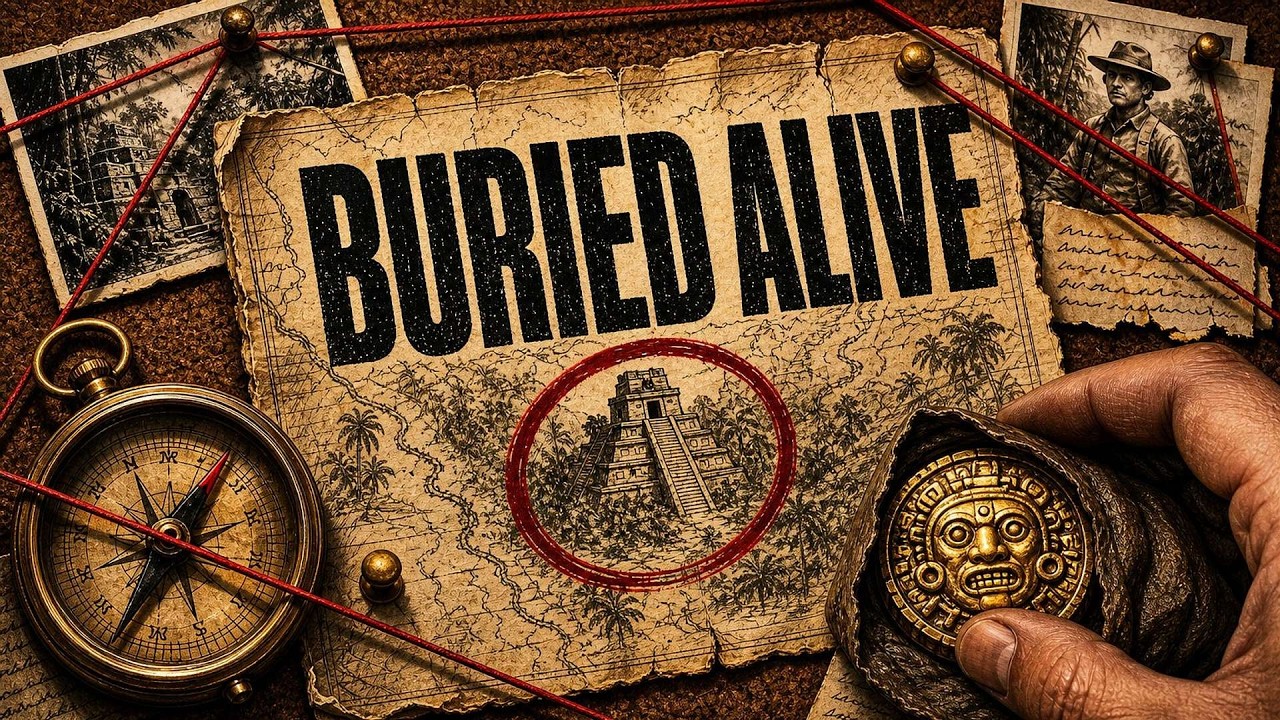
A decorated British officer with Secret Service experience walks into the Amazon carrying a ten page document from 1753 and then disappears so completely that even decades of rescue missions cannot recover proof of what happened. That explorer is Percy Fawcett, and the document is Manuscript 512, a Brazilian archive curiosity that describes an abandoned stone city with a triple archway, obelisk like spires, strange inscriptions, mineshafts, and a gold coin whose imagery does not match any known pre-Columbian culture. The hook is not just the vanishing. It is the possibility that Fawcett was chasing evidence of an Amazon civilisation that breaks the timeline.
We trace why Fawcett took the claim seriously: years of fieldwork, reports of ancient roads and earthworks, and indigenous accounts of older peoples deeper in the forest. From there, the mystery expands into alternative history questions that refuse to die, including Ophir as the source of King Solomon’s gold, the biblical three year voyage that sounds transatlantic, and the role of Phoenician seafarers. The episode also revisits controversial evidence like alleged Semitic inscriptions in Brazil and the disputed Paraíba stone, not as settled fact, but as part of the larger pattern of unsettling coincidences.
Modern archaeology brings a sharp twist. Satellite imagery, ground surveys, and Terra Preta dark soil show that the Amazon supported large, complex societies, forcing a rethink of what was “impossible” only a few decades ago. Yet the most provocative details in Manuscript 512, the Roman style arches and the coin, remain unfound. If you love exploration history, lost city legends, Amazon archaeology, and unsolved disappearance cases, subscribe to Midnight Signals, share this story with a friend, and leave a review with your theory about what really happened to Percy Fawcett.
Frequently Asked Questions
Who was Percy Fawcett and why did he disappear?
Percy Fawcett was a British artillery officer, geographer, and veteran explorer who vanished in the Amazon in 1925 along with his son and a companion while searching for a legendary lost city.
What is Manuscript 512?
Manuscript 512 is a 10-page Portuguese document written in 1753 and discovered in 1839, describing an abandoned stone city deep in the Brazilian interior featuring Roman-style arches, streets, and an unexplainable gold coin.
Did Percy Fawcett ever find the Lost City of Z?
No, Fawcett and his expedition disappeared completely without a trace, and no rescue mission ever found definitive proof of his fate or the location of City Z.
What evidence supports the existence of lost Amazonian civilizations?
Modern archaeologists have uncovered massive geometric earthworks, extensive agricultural networks, and deep deposits of man-made Terra Preta dark soil, proving that the Amazon once supported large, complex societies.
00:00 - Hook And The Missing Explorer
01:26 - Fawcett The Expert Surveyor
01:55 - Clues Of A Lost Amazon Society
02:46 - Manuscript 512 Enters The Story
03:38 - The Stone City Description
06:52 - Ophir And Solomon’s Gold
08:50 - The New York Times Connection
09:58 - A Small Team Goes In
11:52 - Dead Horse Camp And Silence
12:28 - Search Parties And Theories
13:28 - Archaeology Rejects The Idea
14:13 - Terra Preta And Earthworks Emerge
16:13 - History Changing Implications
17:39 - Closing Signals And Next Steps
Hook And The Missing Explorer
SPEAKER_00In 1925, Percy Fawcett walked into the Amazon and never came back. He wasn't chasing El Dorado or some vague native legend. He carried a 10-page Portuguese manuscript from 1753 that described a stone city with Roman arches, obelisks, and gold coins left by a civilization that shouldn't have been there. While he was dying in the jungle, the New York Times ran a story that same year claiming King Solomon's gold had come from Peru. The question isn't whether Fawcett found something. The question is what they buried after he disappeared. Percy Harrison Fawcett wasn't some amateur adventurer with a compass and a dream. He was a decorated royal artillery officer, a trained geographer and cartographer, and a veteran of the British Secret Service who had mapped some of the most hostile terrain on Earth. Between 1906 and 1924, he led seven separate expeditions into the Amazon, charting the Bolivia-Brazil border and surviving conditions that killed lesser men. The jungle wasn't a mystery to him, it was his workplace. He understood the diseases, the predators, the shifting rivers, and the indigenous peoples well enough to earn their trust, rather than their arrows. That's what makes his final disappearance so difficult to explain as simple carelessness or bad luck. A man who had spent 19 years learning the Amazon's moods doesn't simply wander off and starve.
Fawcett The Expert Surveyor
SPEAKER_00Fawcett was born in 1867 and spent his early career in the military, where he developed the discipline and endurance that would define his later life. He transferred his skills to surveying and exploration, becoming one of Britain's most respected South American geographers. By the time he began planning his eighth and final expedition in the early 1920s, he had already survived more near-death experiences in the rainforest than most explorers encounter in a lifetime.
Clues Of A Lost Amazon Society
SPEAKER_00During those earlier trips, Fawcett kept seeing things that didn't fit the accepted story. He found traces of ancient roads, earthworks, and settlements that were far too large and far too organized to be the work of nomadic hunter-gatherers. The indigenous people he spoke with told him stories of a vanished people who had lived in the forest before their own ancestors arrived. They spoke of stone cities and great kings who had ruled from temples deep in the green. At first, Fawcett treated these accounts as folklore, the kind of legend every culture invents to explain the ruins in their backyard. But the physical evidence kept piling up. He began to believe that a great civilization had existed in the jungle long before the first European ships ever reached the Americas, and he wasn't alone in that belief. A
Manuscript 512 Enters The Story
SPEAKER_00document had been sitting in the National Library of Brazil since 1839, written by an unknown hand in 1753, that told a story far stranger than any native legend, and Fawcett had read every page of it. The document was known as Manuscript 512, and it had been discovered almost by accident in 1839 by a naturalist named Manuel Ferreira Lagos, who found it collecting dust in the National Library of Brazil in Rio de Janeiro. The full title of the manuscript was a mouthful, even in Portuguese, but it translated roughly to a historical relation of a hidden, large, very old settlement with no inhabitants found in the year 1753. It was only 10 pages long, but those ten pages would change how Fawcett saw the entire continent.
The Stone City Description
SPEAKER_00The manuscript described a group of Portuguese Bandeirantes who had spent ten years searching the jungle for the legendary mines of Mirabeca. These men were semi-autonomous explorers of mixed Portuguese and indigenous descent who pushed deep into Brazil's interior from Sao Paulo, driven by rumors of silver and gold that the crown wanted for itself. These weren't trained archaeologists or scholars. They were adventurers and fortune hunters, the kind of men who disappeared into the green and either came back rich or didn't come back at all. After a decade of hardship, disease, and near starvation, they stumbled upon something none of them had expected. They found an abandoned city whose architecture looked nothing like anything built by the indigenous peoples of Brazil. The city's only entrance was marked by a triple archway that resembled a Roman triumphal arch, and it bore inscriptions in a language none of the Bandeirantes could read. The main square contained a black pedestal supporting a statue of a man pointing north, and nearby stood a large building decorated with carved reliefs of crosses, crows, and swirling geometric designs. In each corner of the square rose what the manuscript called Roman spires, most likely obelisks. The main street's portico displayed a relief of a half-naked figure wearing a laurel crown. None of it belonged in the New World. The group followed a river near the square and discovered mineshafts filled with rocks that contained silver. They tested the soil along the riverbank and found gold flecks in abundance. Outside the city, they located a large manor house containing fifteen separate rooms arranged around a central chamber that might have been an atrium, and in one of those rooms, a man named Joan Antonio found a gold coin. The coin depicted a boy kneeling on one side, and on the other side a bow, an arrow, and a crown. Nothing about this artifact matched any known pre-Columbian culture. No Incan city ever built Roman arches, no Mayan temple ever featured laurel crown reliefs or obelisks in its squares, and no indigenous civilization of the Amazon ever minted coins depicting European-style imagery. The symbols on the coins suggested a culture with metallurgical skill and artistic conventions that looked unmistakably old world. For Fawcett, the implications were staggering. If the document was even partly true, then someone had built a Mediterranean-style city deep in the Brazilian jungle nearly two centuries before the first Portuguese colonists arrived. That meant the history of the Americas was either far older than the textbooks claimed, or it had been touched by civilizations that the academic world refused to acknowledge. The manuscript also mentioned that the ruins were inhabited by wolves and kangaroo rats. Details that seem oddly specific for a pure fabrication. Whether the author was describing a real place or merely embellishing a campfire tale, the specificity of the architectural details convinced Fawcett that someone had seen something. The jungle had swallowed it once. Fawcett was determined that it wouldn't swallow the truth a second time, and he intended to find
Ophir And Solomon’s Gold
SPEAKER_00it. The biblical land of Ophir appears throughout the Old Testament as the source of King Solomon's gold, silver, sandalwood, precious stones, and exotic animals. In the book of 1 Kings, Solomon's fleet returns from Ophir laden with gold, and chapter 10, verse 14 states that he received 666 talents of gold every year. That's roughly 25 tons of gold annually, a figure so vast that it has baffled historians who try to locate a single Old World source capable of producing it. 1 Kings 10 22 adds a detail that has puzzled scholars for millennia. The voyage to Ophir and back took three years. Three years is an extraordinarily long time for a journey to Africa or Arabia, regions that lie relatively close to Solomon's kingdom in ancient Israel, but it's a perfectly reasonable duration for a transatlantic expedition, especially for ancient sailors navigating by the stars and trading at ports along the way. A voyage to the coast of Brazil and back, with time spent mining and trading, would fit the biblical timeline almost exactly. And the animals mentioned in the same passage, apes and peacocks, are creatures native to regions far beyond the Middle East. The Americas are the only landmass outside the Old World known to have both massive gold deposits and native peafowl. The Phoenicians of Tyre, under King Hiram, were the partners Solomon used to build and crew those ships. They were master seafarers whose trading network stretched across the Mediterranean and into the Atlantic, and their navigational skill was centuries ahead of their time. Some researchers have pointed to alleged Phoenician inscriptions found in Brazil, including the controversial Pariba stone, as possible evidence that these sailors reached the Americas long before Columbus. If any ancient people had the knowledge and the nerve to cross the ocean and return, it was the Phoenicians.
The New York Times Connection
SPEAKER_00And someone at the New York Times apparently agreed. In August 1925, while Percy Fawcett was already deep in the Amazon jungle and likely running out of supplies, the New York Times published an article with a headline that must have startled anyone paying attention. It read, King Solomon's gold came from Peru. The article detailed a theory that the legendary land of Ophir was located in South America, supported by linguistic connections between the name Ophir and similar words used by Kafir and Arab traders. Fir, Afir, Ophir. The names echoed across continents. The timing's almost too perfect to dismiss as coincidence. In the same year that a decorated British explorer was following a Portuguese document toward a lost city with old world architecture in the Brazilian jungle, one of the world's most respected newspapers was running a story claiming that the biblical source of Solomon's immense wealth had come from Peru. One used a printing press, and the other used a machete. And neither of them ever found what the world was hiding, though Fawcett got closer than anyone else ever has.
A Small Team Goes In
SPEAKER_00In the early months of 1925, Fawcett made his final preparations. He assembled a small party consisting of his eldest son, Jack Fawcett, and Jack's friend Raleigh Rimmel, a young man who had begged to join the expedition despite having no jungle experience. Fawcett believed that a small, mobile group would avoid the hostility that larger expeditions provoked, and he was confident that his own expertise would compensate for the inexperience of his companions. The three men traveled light, carrying minimal supplies and relying on Fawcett's ability to live off the land and trade with indigenous communities along the way. They left Cuabah, the capital of Mato Grosso, and headed northeast into territory that no European had successfully mapped. The plan was to follow a trail of rumors, indigenous accounts, and the coordinates suggested by manuscript 512 toward a region Fawcett had codenamed Z. He didn't share the exact route with anyone. He feared that rival explorers or treasure hunters would follow him and steal the discovery. The expedition progressed slowly through the dense forest, and the porters who had accompanied them from Quiaba began to turn back, one by one, as the terrain grew more hostile and the supplies ran lower. Eventually, Fawcett dismissed the last of them and continued on with just his son and Rimmel. From a camp he named Dead Horse Camp, Fawcett sent his final known message back with the retreating porters. It was addressed to his wife, Nina, and it gave no hint of panic or despair. He wrote that they were preparing to push deeper into unexplored country, and that he expected to be gone for some time. After that, the silence was absolute. No messenger ever found them, no signal fire was ever spotted. It was as if the jungle had simply absorbed three living men into its roots.
Dead Horse Camp And Silence
SPEAKER_00No trace of the three men was ever confirmed. Over the following decades, more than a dozen official rescue missions entered the jungle, and hundreds of men died or disappeared in the attempt to find them. The Brazilian government sent search parties. Native trackers scoured the region. Adventurers and journalists followed, each one hoping to be the person who solved the greatest exploration mystery of the 20th century. Some claim to have found bones or artifacts, but none of the evidence was ever definitively linked to Fawcett or his party. None of them returned with real answers.
Search Parties And Theories
SPEAKER_00The most widely accepted theory is that Fawcett and his companions were killed by the Calapalo, or another indigenous tribe, whose territory they had unknowingly entered. A second theory holds that they succumbed to starvation or disease, a fate that had befallen countless explorers before them. A third, more romantic theory, suggests that Fawcett chose to disappear deliberately, living out his days among a remote tribe who welcomed him as a spirit or a leader. But none of these explanations fully satisfy. A man with 19 years of jungle experience doesn't simply blunder into a hostile village. A man who had survived starvation and disease seven times before doesn't suddenly forget how to find food and water. The same man who had a wife, a career, and a reputation in England doesn't willingly abandon his entire life without a word. Something else happened in that jungle. Something that erased three men as completely as if they'd never existed.
Archaeology Rejects The Idea
SPEAKER_00For decades after Fawcett's disappearance, mainstream archaeology dismissed his lost civilization as a fantasy born from jungle fever and colonial arrogance. The idea that a complex society had existed in the Amazon before European contact was considered scientifically impossible. The rainforest was too hostile, the soil too poor, the diseases too relentless to support anything larger than scattered villages. Academics wrote off Manuscript 512 as a tall tale invented by gold-hungry banderants who had mistaken strange rock formations for ancient ruins. Fawcett, they said, had fallen for a story that no serious scholar believed. And for nearly a century, that was the end of the conversation.
Terra Preta And Earthworks Emerge
SPEAKER_00But beginning in the 1990s, researchers, using satellite imagery and ground surveys, began finding evidence that changed the entire conversation. They discovered massive geometric earthworks, some covering hundreds of acres, along with carefully managed agricultural plots and expanses of Terra Prata, a dark, man-made soil that indicated large-scale farming and permanent settlement. In some areas, the Terra Prata was several feet deep and thousands of years old, meaning people had been living in dense communities and managing the land long before the first European ships appeared. The Amazon had indeed supported complex societies, exactly where Fawcett said they would be, and the academic world was forced to admit it had been wrong. Yet the ruins found so far aren't Incan, they don't match Mayan design, and they don't explain manuscript 512's description of Roman arches, obelisks, and laurel-crowned reliefs. The gold coin depicting a kneeling boy with a bow, arrow, and crown has never been matched to any known New World culture, and no amount of modern earthwork discovery accounts for a triple archway at a city's entrance, or that same laurel-crowned figure carved into a portico. These motifs belong to the old world, not the new world. Their Mediterranean designs, hiding in a jungle that should have erased them centuries ago if the accepted timeline were true. Meanwhile, alleged Phoenician inscriptions in Brazil continue to surface, alternately denounced as hoaxes and defended by researchers who operate outside the academic mainstream. The Paraíba stone remains the most famous example, a contested artifact that some believe proves ancient Semitic contact with South America. Mainstream archaeologists have declared it a forgery, but the controversy refuses to die because the questions it raises are too unsettling to ignore.
History Changing Implications
SPEAKER_00The reason this matters isn't simply academic curiosity. If a pre-Columbian civilization with old world connections existed in the Amazon, then the entire timeline of human history would need to be rewritten. The textbooks would have to account for trans-oceanic contact thousands of years before Columbus. The biblical narrative of Solomon's wealth would have a physical anchor on the wrong side of the Atlantic, and the evolutionary model of isolated New World development, the ascent from mud that modern academia preaches, would collapse under the weight of its own omissions. What isn't contested is this a credible British explorer, armed with a document from 1753, walked into the Amazon in 1925 to find a city built by people who didn't fit the accepted timeline. He vanished without a trace. The document stayed in the library, the newspapers moved on, and the jungle kept it secret. There's no tidy ending to this story. Not a single rescue team ever brought Fawcett home. No archaeologist ever found the triple archway or the coin. But the earthworks keep appearing, the Terra Preta keeps getting older, and the manuscript still sits in Rio, waiting for someone brave enough to believe. The jungle has swallowed cities before. The only question left is whether it will give them back before the asking stops.
Closing Signals And Next Steps
SPEAKER_00This has been Midnight Signals. I'm Russ Chamberlain guiding you through the shadows where history meets mystery. Visit MidnightSignals.net to continue the conversation. Explore more episodes and say hello. If you enjoyed tonight's journey, please like, subscribe, and share to help more listeners find the show. Until next time, stay vigilant, seek the hidden, and remember in every silence there is a signal, and in every signal, a story waiting to be told.


