UVB-76's Silent Vigil: Unpacking the 'Dead Hand' System's Enigmatic Guardian
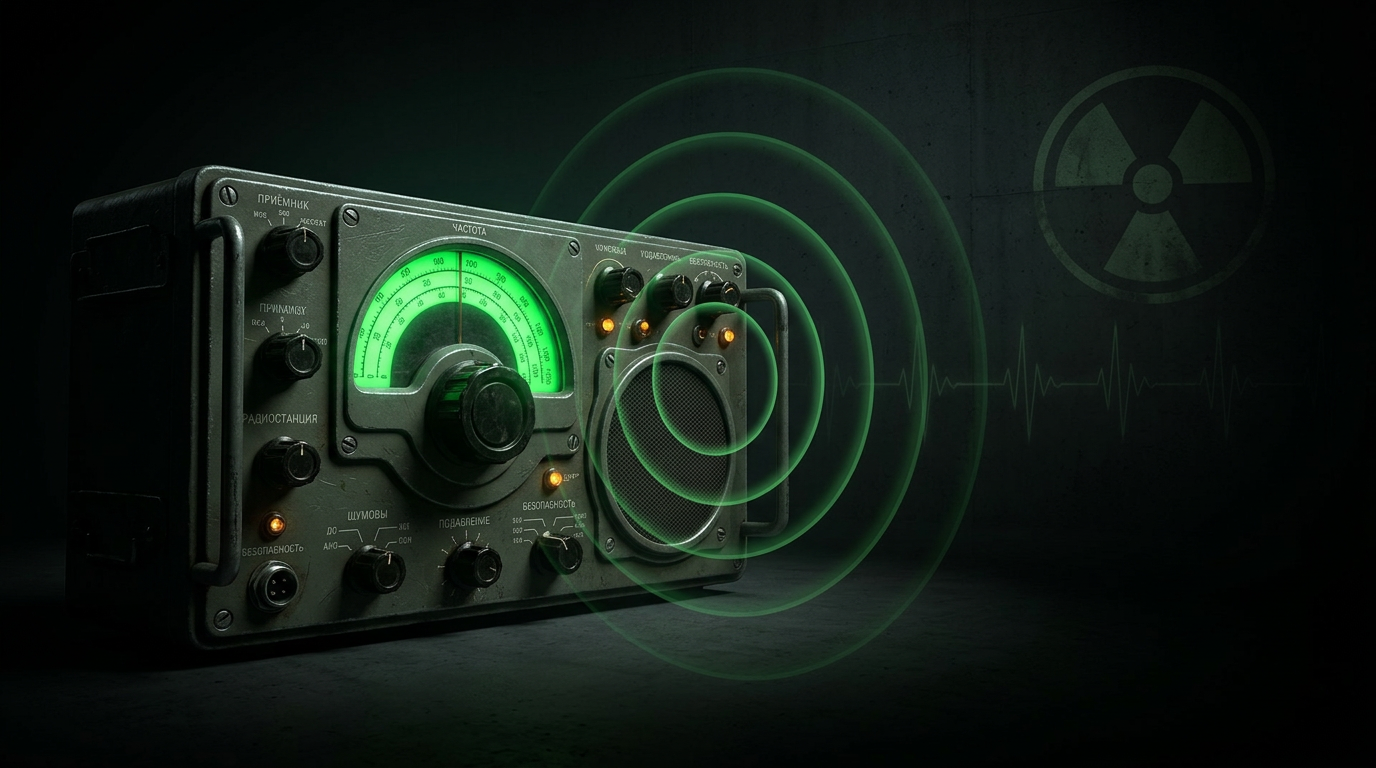
For decades, the UVB-76 signal has hummed from a remote Russian location, a persistent anomaly in the shortwave spectrum. But what if this signal is more than just a curious broadcast? What if it's the silent, unwavering heartbeat of a doomsday protocol, intrinsically linked to the chilling 'Dead Hand' system, and its continued transmission is a testament to a defense strategy designed for the unthinkable?
Key Takeaways
- The persistent UVB-76 signal is theorized to be a crucial monitoring element for the Soviet/Russian 'Dead Hand' automated nuclear retaliatory system.
- This signal's continuous broadcast acts as a potential 'all clear' or confirmation of system readiness, differentiating it from an actual launch trigger.
- The existence of human sounds within the UVB-76 transmission suggests that while automated, the system likely retains a degree of human oversight and control.
- UVB-76's post-Cold War survival indicates that the underlying strategic principles, or at least their monitoring mechanisms, remain relevant in modern defense doctrines.
- Understanding the nuanced role of UVB-76 offers insight into the complex psychological and strategic landscape of nuclear deterrence, moving beyond simple automation to a state of perpetual, watchful readiness.
The Ghost in the Machine: Understanding 'Dead Hand'
The Cold War was a dance on the precipice of annihilation, a period where the concept of Mutually Assured Destruction (MAD) dictated global strategy. Yet, the specter of a pre-emptive, decapitating strike—one that could obliterate a nation's command and control infrastructure before it could retaliate—posed a unique, terrifying threat to the Soviet Union. In response, a system of unparalleled grimness was conceived: 'Perimeter,' more colloquially and chillingly known as 'Dead Hand.' This was not a weapon itself, but an automated launch system, an ultimate failsafe designed to guarantee a devastating retaliatory strike even if the nation's leadership and military command were annihilated in a surprise nuclear assault. The logic was stark: if an aggressor believed they could neutralize Soviet retaliation by destroying its command centers, Dead Hand served as the terrifying rejoinder, ensuring that oblivion would be met with oblivion.
UVB-76: The Signal as a Heartbeat
While the specifics of the Dead Hand system remain shrouded in secrecy and speculation, the prevailing theory connecting it to the UVB-76 signal offers a compelling, if unsettling, explanation for the latter's enduring broadcast. The continuous, monotonous buzz of UVB-76, emanating from a specific frequency and location, is widely interpreted not as the launch command itself, but as a vital 'heartbeat' signal. This ceaseless transmission serves as a constant, audible affirmation that the critical infrastructure for the Dead Hand system—the sensors, the communication lines, the launch protocols—remains operational and intact. In essence, UVB-76 signals that the system is 'alive' and ready, but crucially, not yet triggered. Its silence, conversely, would be the ultimate signal of catastrophe, indicating that the command chain has been broken and the automated system may be forced to initiate its doomsday sequence. This interpretation transforms the signal from a mere anomaly into a critical element of nuclear deterrence, a constant, low-frequency reassurance to potential adversaries that retaliation is not only possible but guaranteed, even in the face of total annihilation.
Human Oversight in an Automated World
The persistent nature of the UVB-76 signal, however, complicates the purely automated vision of Dead Hand. Reports of human voices, background conversations, and even the distinct ringing of a telephone emanating from the broadcast suggest that this is not an entirely disembodied, machine-driven process. Instead, these auditory anomalies point towards a crucial layer of human involvement. It is theorized that while the system is designed to operate autonomously in the event of a catastrophic attack and subsequent communication failure, its day-to-day or week-to-week operation requires human monitoring and maintenance. This human element could be responsible for the continuous broadcast, ensuring its integrity, and potentially for issuing overrides or confirmations. The presence of human sounds, therefore, doesn't necessarily negate the Dead Hand concept but rather refines it. It implies a system that is automated in its ultimate function but managed by humans in its operational readiness. This duality offers a more nuanced understanding: a system designed for the ultimate automated response, yet maintained and overseen by human hands, adding a layer of chilling procedural reality to the abstract concept of nuclear Armageddon. It suggests a watchful cadre of individuals, living in close proximity to this potential doomsday switch, performing routine checks on a system whose activation would mean the end of everything.
The Enduring Relevance of Dead Hand and UVB-76
The fall of the Soviet Union and the official end of the Cold War might have suggested the obsolescence of systems like Dead Hand. However, the continued broadcast of UVB-76, particularly its maintenance and reported relocation to new facilities like the one near Moscow, strongly indicates otherwise. The system, or at least its monitoring component, appears to remain a relevant, albeit covert, aspect of Russian military strategy. This persistence can be attributed to several factors. Firstly, the fundamental principles of nuclear deterrence haven't vanished. The threat of a first strike, while perhaps altered in nature, remains a consideration for nuclear powers. Dead Hand, with UVB-76 as its signal, continues to serve as a powerful deterrent against such an attack, ensuring that any aggressor would face unacceptable retaliation. Secondly, the system embodies a doctrine of assured response. In a world where strategic stability is paramount, guaranteeing a response, even if initiated by an automated system, provides a level of certainty that might be reassuring to a state facing existential threat. The complex, layered nature of nuclear strategy means that older, albeit terrifying, doctrines can persist if they are perceived to fulfill a strategic necessity. UVB-76, therefore, is more than just a relic of the Cold War; it's a symbol of an enduring, albeit deeply unsettling, approach to national security, a signal that continues to broadcast its message of perpetual readiness into the modern era.
The mystery of UVB-76 is a profound glimpse into the mechanics of nuclear deterrence and the strategies designed to prevent global catastrophe, even if those strategies involve the threat of it. To learn more about the chilling theories and historical context surrounding this enigmatic signal, be sure to listen to the full episode of Midnight Signals: UVB-76: The Signal Waiting for the World to End.
Frequently Asked Questions
What is the primary theory connecting UVB-76 to the 'Dead Hand' system?
The most prominent theory suggests that the continuous UVB-76 signal acts as a 'heartbeat' or an 'all clear' indicator for the Soviet/Russian 'Dead Hand' automated nuclear retaliatory system, confirming its operational status without initiating a launch.
Does the presence of human voices in UVB-76 broadcasts mean it's not a fully automated system?
Not necessarily. While 'Dead Hand' is designed for automated launch, the human sounds suggest that the system requires human monitoring, maintenance, and potentially manual oversight to ensure its readiness and prevent accidental activation.
Why would Russia continue to operate a system like 'Dead Hand' after the Cold War?
The persistence of such a system, and its monitoring signal UVB-76, is likely due to its perceived effectiveness as a deterrent against a nuclear first strike and its role in ensuring a guaranteed retaliatory response, remaining relevant in modern geopolitical strategy.
Is UVB-76 the actual launch command for the 'Dead Hand' system?
It is widely believed that UVB-76 is not the launch command itself. Instead, it serves as a signal of operational readiness. The cessation of this signal without a proper override is theorized to be the trigger for the automated launch sequence.


