Are Demons the Ghosts of a Pre-Adamic World? Exploring Lost Souls.
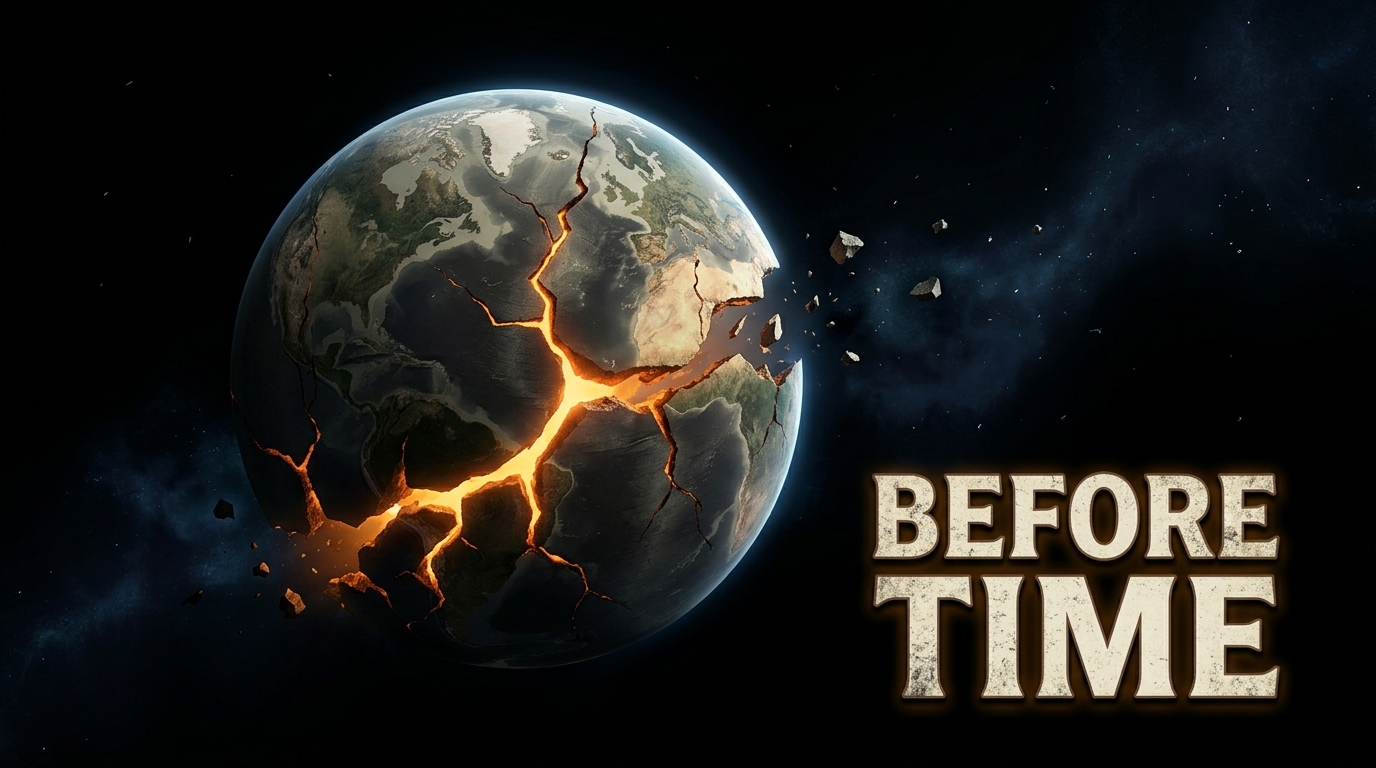
Dive into the chilling possibility that the entities we call 'demons' might not be fallen angels at all, but rather the disembodied spirits of a long-lost civilization that perished before Adam. This post explores the theory connecting these spectral beings to the catastrophic ruin of Earth's first world.
Key Takeaways
- The 'demon' entity may be a fragmented spirit from a pre-Adamic civilization, not a fallen angel.
- These spirits are believed to be trapped in the ruins of their former world after a cosmic cataclysm.
- Their existence is tied to a cyclical view of Earth's history, involving cycles of ruin and restoration.
- The theory suggests these spirits seek to possess living beings to regain a semblance of physical existence.
- This perspective reframes spiritual warfare as a confrontation with the lingering consciousness of a lost world.
The Origin of Entities Beyond Fallen Angels
The concept of demons as fallen angels is deeply ingrained in many theological traditions. However, the Midnight Signals episode, "The Earth Before Adam: The Ruin of the First World," presents a radical alternative rooted in its exploration of a pre-Adamic Earth. This perspective suggests that the entities we fear and misunderstand as demons might originate from a far more ancient source: the inhabitants of a lost world that existed long before humanity.
According to the theory discussed, the Earth underwent a catastrophic event, a "planetary execution" as described in the episode. This cataclysm not only destroyed the physical structures of the first world but also, crucially, stripped its inhabitants of their corporeal forms. These entities, now without bodies, are theorized to be the disembodied spirits – the lingering consciousness – of this ancient, judged civilization. They are not fallen celestial beings in the traditional sense, but rather the spectral remnants of a world that met a devastating end.
Trapped in the Wreckage of a Lost World
The idea of these spirits being "trapped" is a powerful image. The episode posits that these are not free-roaming entities but are intrinsically linked to the very debris and ruins of the first Earth. Imagine a civilization so advanced that its impact is still felt millennia later, not just in geological strata or megalithic structures, but in the very fabric of reality itself. The cataclysm that ended this world, however, also created a prison of sorts for its inhabitants.
These spirits, stripped of their physical existence, are described as fragments of what they once were. Unlike a complete, fallen angel, a "demon" in this context is viewed as a piece, a lingering echo of a once-living soul. Their current existence is one of perpetual unrest, tethered to the place of their destruction. This geological and spiritual graveyard becomes their eternal dwelling, a constant reminder of their lost kingdom and their ultimate judgment.
The episode draws parallels between biblical descriptions of desolation and the potential state of this pre-Adamic Earth. Jeremiah's prophetic vision, often interpreted spiritually, is presented as a literal, terrifying snapshot of this ancient graveyard. Ruined cities, broken walls, and an utter absence of life are described – the physical aftermath of a divine judgment. It's within this desolate landscape that the spirits of the first Earth are said to wander, forever bound to the wreckage.
The Desire for Physicality
A core element of this theory is the motivation behind these spirits' actions. If they are disembodied remnants, it's logical to assume they would yearn for the physicality they lost. The episode suggests that their primary drive is to regain a form, to experience existence beyond a spectral state. This desperation leads them to seek out and attempt to inhabit living beings.
This is where the concept of possession comes into play, reframed through the lens of a pre-Adamic catastrophe. When individuals report experiencing demonic possession, this theory proposes it could be the desperate attempt of these ancient, disembodied spirits to latch onto a host. They aren't necessarily acting out of malice inherent to their being, but out of a profound, existential need to feel, to exist, and to interact with the physical world they can no longer call their own. Their fragmented nature might explain the erratic and often destructive behavior associated with possession.
Spiritual Warfare as a Clash of Epochs
The implications of this theory for understanding spiritual warfare are profound. Instead of a conflict between good and evil in a celestial realm, it suggests a battle for existence and influence on Earth, rooted in ancient history. The current inhabitants of Earth could be unknowingly caught in the crossfire between these ancient, disembodied spirits and forces of restoration or spiritual order.
The idea that we are "walking on the surface of a giant ancient tomb" takes on a new, more personal meaning. It implies that the spiritual battles we perceive might be echoes of an ancient judgment and the ongoing struggle of the spirits from that judgment. Our world, being a "reconstruction effort on a recycled world," is literally built upon the ruins of a previous, failed civilization. The residual energy, the trapped consciousness, the very 'ghosts' of that world, are still very much present and seeking a way back into existence, or at least a way to assert their continued, albeit spectral, presence.
This framing adds a layer of complexity to spiritual encounters. It moves beyond a simple binary of good versus evil, introducing the concept of ancient entities driven by desperation and loss, forever tied to the physical remnants of their world. It's a chilling thought that the unseen forces around us might be the desperate, lingering whispers of a world judged and forgotten, now seeking to reassert their existence through us.
Geological and Historical Echoes
The theory isn't solely based on scriptural interpretation or spiritual conjecture. The episode connects these spectral ideas to tangible evidence of Earth's past. The geological layers, often seen as markers of slow evolutionary processes, are reinterpreted as the debris of a rapid, cataclysmic event. Fossil graveyards, massive rock formations, and even megalithic ruins are presented not as products of slow geological change or primitive human endeavor, but as the fractured remnants of a technologically advanced pre-Adamic society that was violently annihilated.
These physical remnants serve as the anchor for the existence of their spirits. Just as a ruined castle still holds the echoes of its former glory and inhabitants, so too does the Earth itself, according to this theory, hold the spectral imprint of its first inhabitants. The immense scale of these geological anomalies and ancient structures hints at a civilization capable of immense feats, making their complete and sudden disappearance all the more mysterious and fertile ground for theories of divine judgment and lingering spirits.
Conclusion: A World Recycled
The concept of Earth as a "recycled world," a planet that has undergone cycles of ruin and restoration, is a central theme. The theory that demons are the disembodied spirits of a pre-Adamic civilization offers a unique and thought-provoking perspective on the nature of these entities and the spiritual landscape we inhabit. It suggests that beneath the surface of our familiar world lie the deep, ancient scars of a forgotten epoch, and its lost inhabitants continue to exert an influence.
This interpretation moves beyond simple theological debates and delves into the geological, historical, and spiritual possibilities of a world far older and more complex than commonly understood. It challenges us to reconsider what we see, what we feel, and the very nature of the unseen forces around us. For a deeper dive into these ancient mysteries and the chilling evidence supporting this theory, Listen to the full episode and prepare to question everything you thought you knew about Earth's history and the entities that may still linger within its depths.
Frequently Asked Questions
What is the primary difference between this theory of demons and the traditional fallen angel concept?
The primary difference is the origin. This theory suggests demons are the disembodied spirits of a pre-Adamic human or humanoid civilization destroyed by a cataclysm, whereas the traditional view holds they are fallen angels who rebelled against God.
How does the 'Gap Theory' relate to the idea of pre-Adamic spirits?
The 'Gap Theory,' which posits a period of time and potential destruction between Genesis 1:1 and 1:2, provides the foundational timeline for this theory. It creates the necessary space for a prior world and civilization to have existed and then been destroyed before the creation of Adam.
If demons are spirits of a lost world, why do they seemingly exhibit intelligence and malice?
The theory suggests that while they are 'fragments' or disembodied spirits, they retain consciousness and memory from their previous lives. Their actions might stem from a desperate desire to regain physicality or influence, leading to behaviors perceived as malicious, rather than an inherent evil nature like that attributed to fallen angels.
Does this theory propose that all paranormal phenomena are related to these pre-Adamic spirits?
While the theory focuses on the origin of 'demons' as pre-Adamic spirits, it doesn't necessarily claim that *all* paranormal activity stems from this source. However, it offers a compelling alternative explanation for phenomena attributed to spirits or entities, suggesting a possible connection to the ancient, ruined world.
What kind of evidence is cited to support the existence of these spirits?
The evidence cited includes linguistic analysis of Genesis, prophetic visions like Jeremiah's (interpreted literally as descriptions of a ruined pre-Adamic Earth), massive geological anomalies, fossil graveyards indicating sudden extinction events, and megalithic ruins that defy conventional explanations for ancient human capabilities.


