Poveglia Island: Venice’s Forbidden Plague Asylum Where the Bells Still Ring
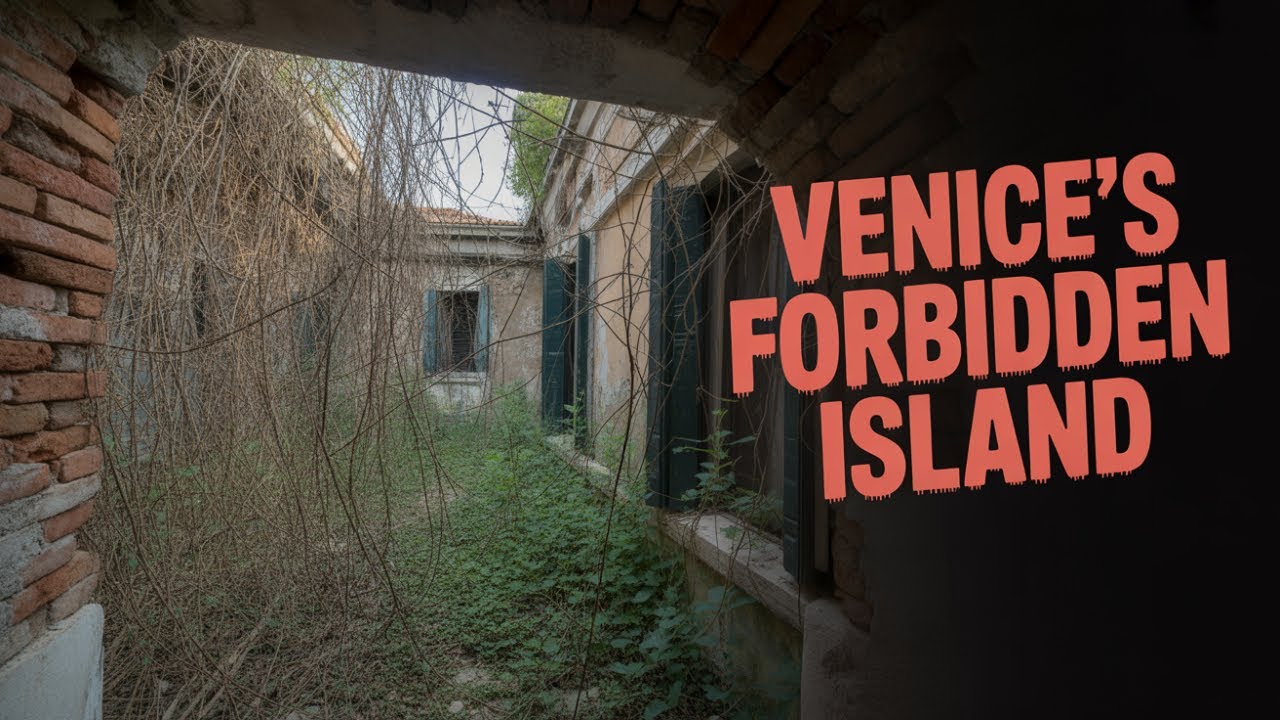


Poveglia sits in the Venetian Lagoon, just a short ride from Venice. From far away it looks calm and green. Up close, it feels like a locked room full of old pain. Once, boats brought the sick here during the Black Death. People were taken from their homes with no goodbyes. Fires burned day and night, and the island turned into a grave that never stopped growing.
Years later, Poveglia was used again, this time as an asylum. The same water that held back disease also held back the world. Stories say patients heard coughing in empty halls, saw shadow figures in ruined wards, and feared a doctor who did terrible things in the bell tower. Even now, the island is off limits, and locals still avoid its shore, as if the quarantine never ended.
00:11 - The Enigmatic Venetian Lagoon
00:11 - The Enigmatic Venetian Lagoon
01:21 - The Arrival of the Black Death
01:21 - The Arrival of the Black Death
04:10 - The Transformation of Poveglia
04:10 - The Transformation of Poveglia
06:45 - The Asylum Era Begins
06:45 - The Asylum Era Begins
09:45 - The Doctor's Brutal Methods
09:45 - The Doctor's Brutal Methods
13:49 - The Doctor's Downfall
13:49 - The Doctor's Downfall
16:10 - The Closure of the Asylum
16:10 - The Closure of the Asylum
17:54 - The Haunting of Poveglia
17:54 - The Haunting of Poveglia
23:16 - The Aggressive Spirits
23:16 - The Aggressive Spirits
25:51 - The Legacy of Suffering
25:51 - The Legacy of Suffering
27:24 - The Future of Poveglia
27:24 - The Future of Poveglia
The Venetian lagoon glitters under the Italian sun, an expanse of water that holds the city of canals in a loving historic embrace.
The Enigmatic Venetian Lagoon
SPEAKER_00Tourists flock to the Piazza San Marco and the Bridge of Sise, seeking the romance and the art of a bygone empire. But barely two miles away from the glittering palaces, a small, green island sits in silence, rotting into the brackish water. This is Povelia. It appears on maps, but it does not appear on tour itineraries. The local boat captains refuse to sail near it. The Italian government has strictly prohibited entry. It is a place defined not by what is there, but by who died there. The island is overgrown, the buildings are skeletal, and the silence is heavy. It is a forbidden zone, a scar on the beautiful face of Venice, hiding a history so dense with suffering that local legends claim the soil itself is 50% human ash. To understand the darkness of Povelia, one must understand the terror that necessitated its creation. Venice was the jewel of the Mediterranean, a merchant empire that traded spices, silks, and goods with the furthest reaches of the known world. But trade ships brought more than wealth, they brought
The Arrival of the Black Death
SPEAKER_00death. In the 14th century, the Black Death arrived in Venice, and the city's unique geography turned it into a trap. The twisting canals and crowded tenements were a breeding ground for Yersinia pestis. The bacteria thrived in the damp, rat-infested underbelly of the floating city. Venice, however, was a city of administration and bureaucracy. They approached the apocalypse with cold, hard logic. The magistrates of health realized that isolation was the only way to save the Republic. They established the world's first organized system of quarantine. The word itself comes from the Venetian dialect, quarantina, signifying the forty days a ship was required to wait before offloading its cargo or crew. Poveia, along with other islands like Lazaretto Vecchio, became the dumping ground for this biological containment strategy. When the plague flared, the city turned on its own citizens. The moment a resident showed signs of the Black Death, fever, shivering, or the telltale black bubos, they were stripped from their homes. The Pizzigamorti, body clearers, often convicts, would drag the sick from their beds. There were no goodbyes. To be taken to the islands was a death sentence. Pavelia became a place of exile. The sick were transported by gondola across the dark water, leaving the lights of Venice behind. Upon arrival, they were not greeted by doctors or nurses in the modern sense. They were greeted by the smell, the stench of rotting flesh and burning bodies drifted across the lagoon long before the boat touched the dock. The island was a holding pen. The infrastructure was minimal. The hospitals were essentially warehouses where the dying were laid on straw pallets, row upon row, in conditions of utter squalor. In the height of the epidemics, the death rate was catastrophic. The dead piled up faster than they could be buried. The ground of Povelia became a massive, churning grave. Workers dug long trenches, stacking bodies in layers like lasagna, separating them with thin coverings of soil and unslaked lime to hasten decomposition and reduce the smell. When the trenches filled, they burned the bodies. Pires burned day and night, casting a grim, flickering orange light against the Venetian skyline. The smoke that drifted over the city was a constant physical reminder of the fate awaiting the infected. Those sent to Pavelia were cut off from the world, the church, and hope. If you were sent there by mistake, a fever misdiagnosed as plague, you were trapped in a viral incubator. The healthy died alongside the sick, suffocated by the miasma of the island, listening to the screams and death rattles of those around them.
The Transformation of Poveglia
SPEAKER_00The island's role intensified in the late 18th century. In 1793, a ship arrived in the lagoon carrying the plague. Povelia was designated as the primary checkpoint, the line of defense that could not be crossed. The island was sealed off, it became a fortress of disease. The crew of the ship and anyone who had contact with them were imprisoned there. The severity of the containment was brutal. Anyone attempting to leave the island was shot. The mandate was clear. The island could perish so that Venice could live. During these years, the soil of Povelia underwent a grim transformation. The sheer volume of human remains decomposed into the earth. Legends persist that the viticulture on the island, the grapes grown in the asylum gardens years later, thrived on the nutrients of thousands of corpses. The dust on the island is said to be sticky, a mixture of dirt and the ash from the centuries of cremation pyres. The treatment of the dead during the plague years also gave rise to dark folklore that permeates the region. In the panic of the epidemic, the line between life and death blurred. Comas and plague-induced trances often mimic death. It is a historical certainty that some victims were thrown onto the piles or into the pits while still breathing, waking up only to find themselves buried under the weight of rotting corpses. Archaeological evidence from similar plague pits in the lagoon reveals the superstition that gripped the gravediggers. Skeletons have been found with bricks forced into their mouths. This was a preventative measure against the shroud eaters, vampires. The belief was that the dead, driven by hunger, would chew through their burial shrouds and spread the pestilence. The brick was there to starve the monster, to stop the chewing. This ritualistic violence against the corpses highlights the atmosphere of supernatural terror that reigned on the island. The workers weren't just afraid of the disease, they were afraid of the dead themselves. The infrastructure on Pavelia during this time was strictly utilitarian. There were checkpoints, warehouses for contaminated goods, and the barracks for the sick. The beautiful church of San Vitale, which had stood on the island since the 12th century, watched over this transition from community to charnel house. Its bell tower, which still stands today as a lighthouse and landmark, rang for the dead until the bells were removed. The silence that followed was deafening. By the time the Napoleonic era arrived, the island's identity was cemented.
The Asylum Era Begins
SPEAKER_00Napoleon's forces saw the strategic value of the island and the practical use of its isolation. They destroyed the church of San Vitale, leaving only the bell tower and converted the remaining structures for military use. But the primary legacy remained the dead. The military garrison there were living atop a graveyard. The sheer scale of death is difficult to comprehend. Estimates vary, but it is often cited that over 100,000 people died on Povelia and the surrounding quarantine stations over the centuries. This concentration of death in such a small geographic area, Povalia is only about 17 acres, created a physical and metaphysical weight. The ground is uneven, shaped by the pits. The vegetation grows wild and aggressive, fed by the organic matter of the victims. The end of the major plague outbreaks did not bring peace to Povelia. The island sat dormant for a time, a ghost in the lagoon. It was a place the Venetians tried to forget, a repository for the city's nightmares. But the state needed space. As the 19th century progressed, the understanding of disease shifted from the mystical to the medical, yet the treatment of the afflicted remained brutal. The isolation that made Pavalia perfect for plague victims made it attractive for a new kind of exile. The silence that had settled over Pavalia after the Napoleonic Wars was broken in 1922. The island, still heavy with the reputation of the dead, was chosen for a new purpose. The existing buildings, some dating back to the maritime shipping era and others remnants of the Lazaretto, were renovated. The official designation was benign, almost charitable, a retirement home for the elderly. But in the Venetian archives and the memories of the locals, the function was far more specific and far darker. It became an asylum. The isolation that had once contained the plague was now repurposed to contain the mentally unbalanced. The geography of the island remained a perfect prison. The water was a wall that no inmate could scale. The early 20th century was a volatile time for psychiatry. The understanding of mental illness was in its infancy, often bridging the gap between medical science and medieval torture. In Italy, the rise of fascism in the 1920s brought a utilitarian cruelty to the treatment of the unproductive. Povelia became a warehouse for those who did not fit into the regimented society of the mainland. The definition of insanity was loose. It included the schizophrenic and the manic, but it also swept up the depressives, the eccentrics, and the inconveniently elderly. Families who wanted to hide a shameful relative sent them to the island. Once the boat crossed the lagoon, the patients effectively ceased to exist as citizens. The architecture of the asylum reflected this philosophy of containment. The windows were barred
The Doctor's Brutal Methods
SPEAKER_00with heavy iron. The corridors were long, tiled, and echoing, designed for easy cleaning and maximum visibility. There were no private spaces. The patients lived in communal wards where the raving of one disturbed the sleep of all. The proximity to Venice became a unique form of psychological torture. From the high windows of the asylum, patients could see the campanile of San Marco and the bustle of the Lido. They could see the life they were barred from. The beauty of the lagoon, usually a source of peace, became a taunting reminder of their hopeless confinement. But the true horror of the Pavelia Asylum was not the isolation, it was the treatment. The asylum operated with zero oversight. No medical boards visited the island. No family members came for Sunday visits. The head doctor, a figure whose name has been scrubbed from many records but who lives on in the dark folklore of the region, ruled the island like a king. He was a man obsessed with the physical mechanisms of the brain, driven by a desire to carve out the madness he saw in his patients. In the 1930s, the lobotomy was gaining traction as a miracle cure for severe mental illness. It was a brutal procedure, often involving the severing of connections in the prefrontal cortex. On the mainland, in prestigious hospitals, this was done with a veneer of surgical precision. On Pavelia, it was done with a hammer and a chisel. The legends, supported by the layout of the ruins and the medical debris found on the site, suggest that the doctor performed these experiments in the bell tower. The tower was the highest point on the island, isolated even from the rest of the asylum. It was his private laboratory. The patients were dragged up the narrow stairs to the room at the top. Anesthesia was expensive and often deemed unnecessary for the insane, whose perception of pain was thought to be dulled by their madness. The doctor used a hand drill or a specialized pick, hammering it through the eye socket or into the skull to scramble the frontal lobes. The goal was to render the patient docile. A successful operation resulted in a human vegetable, quiet, compliant, and easy to manage. A failed operation resulted in death or agonizing permanent brain damage. The screams from the tower were said to be audible across the water on quiet nights, a new kind of siren song for the fishermen who gave the island a wide berth. The doctor's experiments allegedly went beyond standard lobotomies. He was searching for the physical root of insanity. He believed he could find the madness located in the tissue of the brain and excise it like a tumor. This obsession led to vivisections and crude neurological tampering. The asylum became a house of horrors where the patients were nothing more than raw material. They were the perfect subjects. Nobody cared if they lived or died, and there was no one to hear them if they cried for help. The atmosphere on the island began to shift. The patients, already fracturing under the weight of their own illnesses, began to report things that the doctors could not explain. They claimed to see the plague victims. The Lazaretto history of the island was rising up to meet the asylum present. Patients in the wards would scream that burning men were standing at the foot of their beds. They whispered about the plague doctors with their beaked masks walking the corridors at night, checking for bubos on the living. For the medical staff, these reports were dismissed as mass hysteria, a symptom of the collective madness of the population. The doctor, in his arrogance, viewed it as a fascinating development in their pathology. He documented their hallucinations with cold detachment, but the irony of Pavalia is that the line between the sane and the insane is porous. The terror of the patients was infectious. The nurses and orderlies began to feel the heaviness of the air. They reported cold spots, the sensation of being watched, and the inexplicable smell of sulfur and rotting flowers, the scent of the
The Doctor's Downfall
SPEAKER_00plague graves. The legend of the doctor's demise is the climax of the asylum's history. It is said that the madness he tried to cut out of his patients eventually infected him. The specific nature of his unraveling varies in the telling, but the core narrative is consistent. The doctor began to hear the voices. At first he assumed it was the patients in the wards below, but the voices persisted when he was alone in the bell tower. They were not the incoherent ramblings of the asylum inmates, they were the collective, angry whispers of the thousands buried in the soil beneath the foundations. The ghosts of the plague victims and the spirits of the patients he had butchered in his experiments began to surround him. He complained of insomnia, of shadows moving in the corners of his vision. The predator became the prey. The absolute authority he wielded on the island meant there was no one to check his decline. He spiraled into paranoia, convinced that the patients were conspiring with the dead to destroy him. The end came on a night shrouded in the thick, damp fog that often rolls in off the Adriatic. According to the story, the doctor fled to the bell tower, seeking sanctuary in his laboratory, but the spirits followed him up the stairs. In a fit of terror, or perhaps driven by a final supernatural push, he threw himself, or was thrown, from the top of the campanile. The fall did not kill him instantly. The legend becomes incredibly specific here, a detail that suggests a witness. The doctor lay broken at the base of the tower, writhing in agony. A nurse, or perhaps a groundskeeper, watched from the shadows. As the doctor struggled to breathe, a mist rose from the ground. It was not a natural fog, it was a dense, white vapor that seemed to have intent. It coiled around the dying man, entering his mouth and nose, choking the life out of him. The island itself finished what the fall had started. The doctor was swallowed by the Povalia soil, joining the legion of the dead he had tormented. Following the doctor's death, the energy of the asylum collapsed. The staff were terrified. The administration could no longer maintain the facility. The brutality of the treatments and the high mortality rate were becoming difficult to hide, even in a fascist
The Closure of the Asylum
SPEAKER_00state. But it wasn't until 1968 that the facility was officially closed. The closure was abrupt. It was not a phase shutdown, it was an evacuation. When the boats came to take the last patients and staff away, they left almost everything behind. The urgency of the departure is evident in the ruins today. Beds were left unmade, medical files were left scattered on the floor. Equipment, expensive and heavy, was abandoned in the operating theaters. It was as if the order had been given to flee, not to move. The island was surrendered back to the ghosts. For a brief period after the closure, the island was sold to a private owner who intended to build a holiday villa. He arrived with a small crew to begin restoration. They spent one night on the island. The next morning, they fled in a panic, the owner refusing to ever speak of what he saw. He sold the island immediately. The story goes that his daughter was lacerated by an invisible force, her face requiring fourteen stitches. The message was clear. The island was no longer open to the living. The buildings of the asylum still stand, slowly devoured by vegetation. Rusted bed frames and surgical tools remain in the ruins, physical evidence of the pain endured there. The bell tower, though its bell was removed decades ago, is said to still toll on certain nights. Not a call to prayer, but a warning. When the doors were finally locked in 1968, the human element was removed, leaving only the residue of what had happened. The screams that once echoed off the tiled walls were now trapped inside them. The island had successfully expelled the living, reclaiming its sovereignty as a kingdom
The Haunting of Poveglia
SPEAKER_00of the dead. The reputation of Pavelia does not rely solely on dusty archives or historical records of the plague. It lives in the present tense, carried on the breath of the locals who refuse to speak its name and in the terrified accounts of the few who have dared to trespass. The haunting of Pavelia is not a collection of Victorian ghost stories featuring rattling chains and translucent ladies in white. It is described as something far more visceral, a heavy, malignant pressure that seeks to expel the living. The island is said to be aggressive. It does not want visitors. The paranormal phenomena reported here are consistent with the history of the land. Confusion, pain, rage, and a desperate suffocating desire to escape. The first layer of this spectral anguish is auditory. The soundscape of Povalia is reported to be an impossible cacophony given its abandonment. Fishermen who work the waters of the lagoon, though they stay well clear of the island's shores, have reported hearing the sounds of a bustling, tragic population drifting across the water on windless nights. They describe a low, rhythmic thrumming, like a heartbeat, interspersed with the distinct sounds of coughing. This is not the cough of a cold, but the wet, rattling wretch of the plague-stricken, a sound that has been absent from the medical reality of Venice for centuries, but apparently remains trapped in the acoustic memory of the location. More chilling are the screams. Witnesses have described hearing sudden, sharp cries of agony that seem to originate from the upper floors of the asylum ruins. These are not the cries of gulls or the creaking of timber. They are human vocalizations, stripped of language, conveying only raw pain. It is often speculated that these are the residual echoes of the lobotomy patients, the sonic imprint of the drill breaking through bone in the bell tower. The most pervasive auditory phenomenon, however, is the bell itself. The heavy bronze bell was removed from the tower decades ago, likely melted down or sold. Yet, the residents of the nearby island of Lido and the passing boats frequently report hearing the deep, iron toll of the campanili. It rings out at odd hours. A phantom summons that has no physical source, marking time for a population that no longer breathes. Those who have illicitly stepped foot on the island describe an immediate physiological reaction. This goes beyond simple fear. It is a somatic response to the environment. Visitors often report a sudden, crushing headache the moment they step off the boat onto the muddy bank. This is frequently accompanied by nausea and a sensation of breathlessness, as if the air itself is too thick to inhale. This physical rejection is interpreted by paranormal researchers as the island's defense mechanism, a psychic barrier generated by the sheer density of trauma in the soil. The ground, composed so heavily of human ash, is said to carry a negative charge that interacts violently with the bioelectric fields of living humans. The visual apparitions on Povelia are distinct and disturbing. Unlike the fleeting shadows seen in many haunted locations, the entities on Povaglia are often described as solid and confrontational. The most infamous figure is that of the Doctor. Even in death, he seemingly patrols his domain. Trespassers in the asylum ruins have reported seeing a tall, dark figure watching them from the shadows of the corridors. He does not flee. He observes. There is a palpable sense of malevolence associated with this entity. Explorers have described feeling a sudden, intense spike of anxiety when entering the bell tower, a feeling of being hunted. Some have reported being physically pushed or shoved near the top of the stairs, a reenactment of the violence that allegedly ended the doctor's life. Another recurring figure in the island's lore is little Maria. While her historical existence is difficult to verify among the thousands of anonymous dead, the legend persists of a young girl who was separated from her parents. During a plague outbreak, she is seen standing on the shoreline, crying, looking across the lagoon toward Venice. She is the avatar of the island's sorrow, representing the countless families torn apart by the quarantine laws. Unlike the doctor, who inspires terror, the apparition of the child inspires a profound, weeping despair. Visitors who encounter her often report being overcome with a sudden, inexplicable grief, sobbing uncontrollably without understanding why. The haunting of Povalia is also characterized by physical aggression. This is not a passive haunting. Reports of scratches, bites, and bruises appearing on the bodies of trespassers are common. A famous incident involving a television production crew who were granted rare permission to spend the night ended in chaos. One of the presenters claimed to have been possessed by a violent entity. The crew heard him screaming in the dark, and when they found him, he was convulsing and attacking the air. His personality completely submerged by a rage that was not his own. He later described the sensation as a red fog filling his mind, a commanding voice ordering him to leave or die. The crew evacuated the island before dawn, shaken and refusing
The Aggressive Spirits
SPEAKER_00to return. This aggression is often concentrated in the psychiatric ward. The energy in these rooms is described as chaotic and loud. Psychics who have visited the island claim that the spirits of the asylum patients are still trapped in the repetitive cycles of their madness. They are not at rest. They are pacing the cells, enduring the phantom pain of their treatments, and lashing out at the living who disturb their purgatory. The concept of stone tape theory, the idea that emotional events can be recorded in the physical environment, is frequently applied to Povella. The brick and stone of the asylum, porous and old, are thought to have absorbed the decades of high-intensity emotional discharge from the tortured patients, replaying it on a loop that sensitive individuals can perceive. The landscape creates two distinct flavors of dread. The plague fields, overgrown with thick vegetation, possess a suffocating stillness. Visitors walking through the high grass report the sensation of hands grabbing at their ankles and the ground shifting beneath them. In contrast, the asylum buildings feel watched. The main hospital building is the epicenter of intelligent haunting, where doors slam shut and voices whisper directly into the ears of explorers, telling them to leave. There is also the matter of the Povalia contagion. Many who visit the island claim that the haunting follows them home. They describe a lingering sense of depression, nightmares filled with images of the island, and the smell of sulfur manifesting in their own homes days after the trip. It is as if the island is a pathogen, and the visitor has become a carrier. This aligns with the island's history as a quarantine zone. Just as it once contained a biological virus, it now seems to contain a spiritual one. The fear is that by entering the zone, one breaks the quarantine, allowing the darkness to hitch a ride back to the mainland. The terror of Povalia is compounded by the fact that the suffering there was so prolonged. A battlefield is a site of sudden, violent death. A murder scene is a site of a specific, momentary tragedy. But Povalia was a machine of death that ran for centuries. The suffering was bureaucratic, organized, and sustained. The sheer duration of the trauma has purportedly stained the fabric of reality on the island. The veil between the worlds is described as being worn thin by the friction of so many souls passing through it under duress. This is why the manifestations are so strong. They don't have to push hard to break through to our side.
The Legacy of Suffering
SPEAKER_00Ultimately, the question of why Povelia is haunted is answered by the soil itself. It is a mass grave that was never consecrated, a hospital that was never a place of healing. The rituals of death, the last rites, the decent burial, the mourning, were denied to the thousands who ended up there. They were treated as refuse, biological waste to be burned and buried. The haunting is, in many ways, a demand for acknowledgement. The screams, the apparitions, and the bells are the only way the forgotten dead can insist on their existence. They are making noise because for centuries the world tried to silence them. The haunting is the natural consequence of treating human beings like garbage. Eventually, the landfill speaks back. The spectral anguish of Pavalia is the sound of a history that refuses to stay buried, clawing its way up through the ash to terrify the living into remembering. Today, Pavalia remains a rotting tooth in the mouth of the lagoon. The Italian state attempted to auction the lease in 2014, hoping a luxury hotel might eventually rise from the ash. The highest bid was insultingly low, halting the sale. The island sits in legal limbo, strictly off limits to all but trespassers who bribe local boatmen. Nature is reclaiming the brick and mortar, slowly pulling the asylum back into the earth. Vines choke the bell tower, and the forest floor thickens over the plague pits. The future of Pavalia seems destined for silence.
The Future of Poveglia
SPEAKER_00It stands as a forbidden monument to human suffering, a place where the history is too toxic to be paved over. Perhaps this is the only fitting end. Some scars are too deep to heal, and some grounds are too heavy to walk upon. The island remains a dark mirror to Venice, reflecting the true cost of survival. It waits in the gray water, a testament to the forgotten souls who were exiled to die so that the city could live. The quarantine is now permanent. This has been Midnight Signals. I'm Russ Chamberlain guiding you through the shadows where history meets mystery. Until next time, stay vigilant, seek the hidden, and remember in every silence there is a signal, and in every signal, a story waiting to be told.


