Antarctica’s Forbidden Maps and the Secret Ice Wall
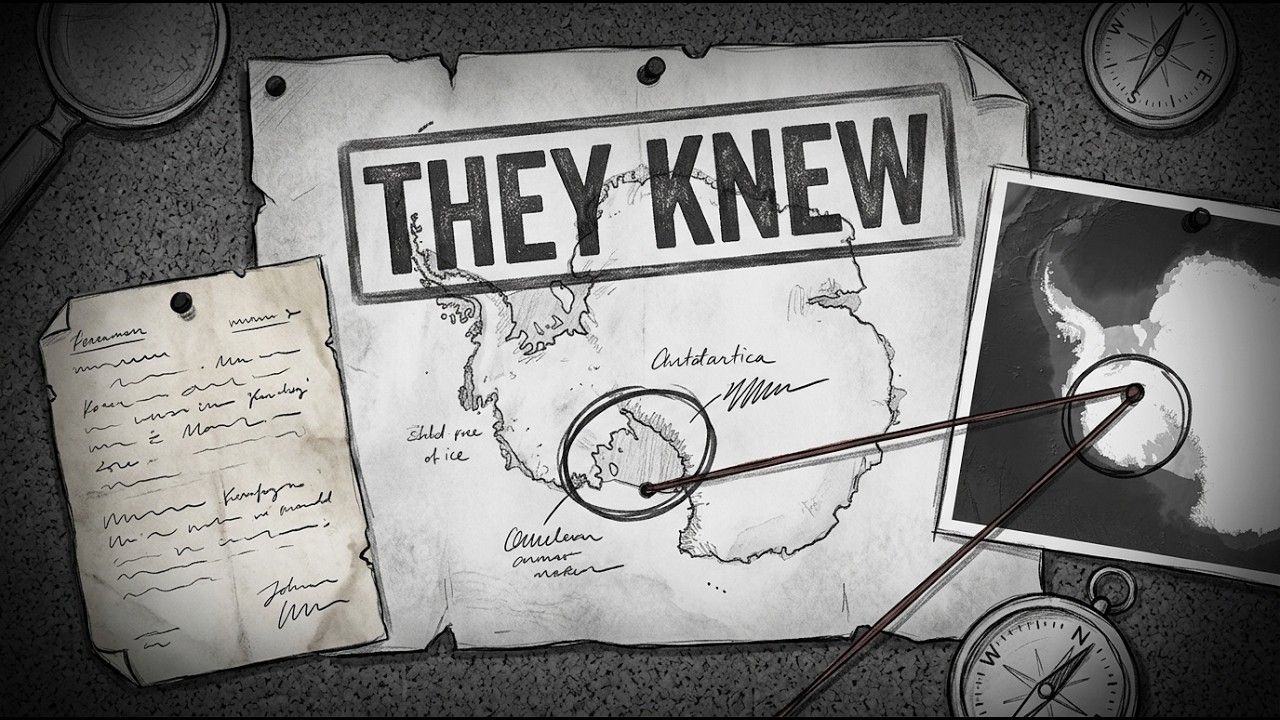



Explore the mysteries of Antarctica's forbidden maps and the secret ice wall. Ancient cartography suggests an ice-free continent mapped long before modern discovery, raising questions about the strict control and military secrecy surrounding this region today. Discover what lies beyond the hidden boundaries.
Key Takeaways
- Ancient maps depict Antarctica as an ice-free continent with detailed geography, suggesting knowledge predates its official discovery.
- Modern Antarctica is subject to strict international treaties and military enforcement, preventing independent exploration and raising questions about what is being hidden.
- Admiral Byrd's 1947 expedition and German Antarctic expeditions before WWII reported anomalies and hidden facilities, fueling theories of a significant cover-up.
- Subglacial discoveries like Lake Vostok, unusual life forms, and geometric patterns hint at unexplained phenomena beneath the ice.
- The true purpose of the Antarctic Treaty may extend beyond environmental protection to enforce secrecy about the continent's hidden truths.
Antarctica’s Forbidden Maps and the Secret Ice Wall
Welcome to Midnight Signals, where we delve into the shadows of history and the unexplained. In this episode, host Russ Chamberlin explores one of the most enduring and heavily guarded mysteries on Earth: Antarctica’s forbidden maps and the secret ice wall. Ancient cartography presents a startlingly different picture of the frozen continent, one that directly contradicts modern scientific understanding. These historical documents depict detailed coastlines, mountains, and even ice-free landmasses, suggesting that early explorers possessed knowledge of a world that has since been deliberately obscured by global policy.
Today, access to Antarctica is heavily restricted. Strict international treaties and formidable military enforcement prevent independent researchers and curious minds from verifying the claims hinted at in these ancient records. The profound disparity between what these historical maps show and what the public is permitted to see raises significant questions about the true nature of the Earth’s southernmost boundary and what might lie beyond the visible icy frontier. The mystery intensifies when we consider the immense military presence and the 54 nations that collectively maintain absolute control over this vast, frozen continent. While the official narrative consistently emphasizes environmental preservation, the extreme level of restricted access strongly suggests that a much larger, more profound secret is being guarded beneath the ice.
The Secrets of Antarctica and Admiral Byrd’s Expedition
The enigma surrounding Antarctica is not new. During Operation High Jump in 1947, a massive military force, led by Admiral Richard Byrd, embarked on a charting mission. However, the operation, initially planned for eight months, abruptly withdrew after only eight weeks. While official explanations cited equipment failure, whispers of leaked reports suggest a far more dramatic encounter, including casualties and potential combat. What exactly did Admiral Byrd’s expedition encounter that necessitated such a swift and unexplained withdrawal? Some accounts speak of impossible aircraft observing the expedition and vanishing into the ice, hinting at encounters beyond conventional understanding.
German Antarctic Expeditions and Hidden Bases
Further fueling the intrigue are reports from pre-WWII German expeditions, such as the New Swabia expedition in 1938. These missions extensively photographed and mapped large swathes of Antarctica. German reports described unexpected ice-free regions, remarkably warm lakes within frigid zones, and extensive cave systems. These findings have given rise to persistent theories about hidden German facilities, most notably the legendary Base 211, and suggest that the Germans planned to return, armed with precise mapping data.
Anomalies, Restricted Zones, and Subglacial Discoveries
Modern explorers and even civilian aircraft have reported bizarre anomalies in specific Antarctic zones. Instrument failures, compass malfunctions, and GPS blackouts are common occurrences. Civilian aircraft that deviate into supposedly restricted airspace are routinely intercepted by military escorts, underscoring the strict control exerted over certain areas. These anomalies extend beneath the ice itself. Subglacial discoveries include Lake Vostok, a vast body of liquid water existing miles beneath the ice sheet, unique microbial life with unknown taxonomy, intriguing geometric patterns detected via satellite imagery, and extensive tunnel systems revealed by seismic surveys. These findings hint at a hidden world that defies easy explanation.
The Antarctic Treaty’s True Purpose and Ancient Knowledge
The Antarctic Treaty, signed by 54 nations, is publicly presented as an environmental protection agreement. However, its stringent provisions for mutual inspection and absolute control over exploration raise questions about its real purpose. Could it be a coordinated effort to enforce secrecy and prevent independent discovery? The historical maps provide compelling evidence that the current narrative about Antarctica is incomplete. Maps such as the Piri Reis (1513), Orontius Finaeus (1531), and Urbano Monte (1587) depict Antarctica without ice, featuring detailed coastlines, rivers, and mountain ranges that eerily align with modern subglacial topography. This suggests a profound pre-historic knowledge of an ice-free continent.
The Ice Age Civilization and Artificial Structures
These ancient maps lead to fascinating theories. One prominent idea is that Antarctica may have been mapped during a brief, warmer period around 12,000 years ago, implying the existence of an advanced civilization long before recorded history. The intense secrecy surrounding the continent could be an effort to hide evidence of this civilization or to conceal what led to its demise. Some researchers even propose a more radical hypothesis: that Antarctica, or at least significant portions of it, might be an artificial structure, perhaps built by a pre-flood civilization for unknown purposes, such as containing the oceans or protecting something vital. The geometric anomalies and unusual heat signatures detected beneath the ice lend a strange credence to these speculative ideas.
The Unseen Barrier and the Guarded Truth
The ice wall itself stands as the most visible and imposing barrier in Antarctica. In many regions, it rises dramatically over 200 feet, presenting a sheer cliff of ancient ice that extends as far as instruments can measure. It acts as a formidable natural defense, but combined with the military presence and strict treaty, it becomes a symbol of a much deeper, more deliberate form of concealment. The pattern of control isn't coincidence; it's protocol. Something in Antarctica demands this level of secrecy, a level that has been maintained since nations first grasped the implications of what lay beyond the forbidding ice wall. As Russ Chamberlin often ponders on Midnight Signals, the question isn't merely what's in Antarctica, but more crucially, why they won't let us see it. The maps don't just show what was; they reveal what has been meticulously hidden.
- (00:09) - The Secrets of Antarctica
- (11:05) - The Treaty and Its Real Purpose
- (16:20) - Knowledge Beyond the Ice Wall
- (16:36) - Closing Thoughts and Reflections
Frequently Asked Questions
What is the secret ice wall in Antarctica?
The 'secret ice wall' refers to the vast, imposing ice shelves and cliffs of Antarctica, which are seen by some as a physical and metaphorical barrier to hidden knowledge about the continent.
What did ancient maps reveal about Antarctica?
Ancient maps like the Piri Reis and Orontius Finaeus depict Antarctica without ice, showing detailed coastlines and mountain ranges, suggesting it was mapped when ice-free.
Why is Antarctica subject to strict controls?
The Antarctic Treaty, signed by 54 nations, officially focuses on environmental preservation but enforces strict controls that critics suggest are meant to hide unexplained anomalies and potential discoveries.
What anomalies have been found beneath Antarctic ice?
Beneath the ice, researchers have found Lake Vostok, unique microbial life, geometric patterns, and possible tunnel systems, hinting at complex and hidden features.
Russ Chamberlin (0:02): In 1947, Admiral Richard Byrd returned from Antarctica and made a statement that still echoes through classified briefings today. He spoke of a land beyond the pole, a region that could hold the key to our future. Within months, his expedition logs were sealed. Within years, 54 nations signed the Antarctic Treaty, the most unusual international agreement in human history. Nations that were building nuclear weapons to destroy each other suddenly found common ground.
Russ Chamberlin (0:30): They couldn't agree on Berlin. They couldn't agree on Korea. But they agreed on the ice. Why? Why does a wasteland of ice require military grade secrecy?
Russ Chamberlin (0:41): Why are independent explorers turned back by armed escorts? Why do compasses fail and aircraft disappear in specific zones? The official answer is environmental protection, but the evidence tells a different story. This is about the expeditions that ended in silence, the physical anomalies that defy explanation, and the maps that show what shouldn't exist. Operation High Jump launched in August 1947 with a force that seemed excessive for a mapping mission.
Russ Chamberlin (1:10): Admiral Byrd commanded 4,700 men, 13 ships, and 33 aircraft. The plan was an eight month expedition to chart the Antarctic coastline and establish research stations. Eight weeks later, the entire operation withdrew. No official explanation was given. Official reports cited equipment failure due to weather, but leaked casualty lists tell a different story.
Russ Chamberlin (1:35): They lost men, and they lost aircraft, some of which were reportedly shot down, but by whom? There were no other nations in Antarctica. Bird's diary entries from those weeks describe encounters that don't fit the official narrative. He wrote about green valleys where there should have been ice, warm lakes in regions that registered far below freezing, aircraft that moved with impossible speed and maneuverability, craft that seemed to observe the expedition before vanishing into the ice. In a radio interview after his return, Bird mentioned a land of eternal mystery, a continent that held secrets that could change everything.
Russ Chamberlin (2:14): Then the interview stopped. The diary was classified. But High Jump wasn't the first expedition to find something unexpected. In 1938, the Germans launched the new Swabia expedition under Captain Alfred Richer. Their Dornier flying boats photographed over 230,000 square miles of Antarctic territory, dropping swastika markers to claim the land.
Russ Chamberlin (2:37): Expedition returned with reports of ice free regions, warm water lakes, and cave systems that extended deep beneath the surface. These weren't just observations. The Germans mapped these areas with precision, suggesting they planned to return. The theory of Base 211 emerged from these reports. According to declassified intelligence documents, the Allies believed the Germans had established an underground facility in New Swabia, using geothermal vents to create habitable spaces beneath the ice.
Russ Chamberlin (3:08): Submarine activity in the region continued even after the war ended in Europe. U boats were detected near the Antarctic Coast months after Germany's surrender. Some never returned to any known port. This is why Operation High Jump matters. The expedition went to the exact regions the Germans had explored.
Russ Chamberlin (3:27): Byrd's task force included icebreakers, submarines, and a carrier group. For a mapping mission, the firepower was extraordinary. Then came the early withdrawal, the sealed records, and decades of silence. Every major Antarctic expedition since follows the same pattern. Teams arrive with ambitious plans and cutting edge equipment.
Russ Chamberlin (3:48): They encounter something unexpected. Then they leave early, their findings classified or dismissed as instrument error. The pattern isn't coincidence, it's protocol. Something in Antarctica demands this level of control, and it's been that way since nations first realized what lay beyond the ice wall. The expeditions didn't just find a frozen continent, they found something that required every major power on Earth to agree on absolute secrecy.
Russ Chamberlin (4:17): The ice wall itself stands as the most visible barrier. In some regions, it rises over 200 feet, a sheer cliff of ancient ice that extends as far as instruments can measure. It is a physical barrier that perfectly mirrors the psychological one. It stops ships, and the treaty stops questions. Ships that approach certain sections report compass failures before they reach visual range.
Russ Chamberlin (4:42): GPS systems lose signal or display impossible coordinates. Electronic equipment shuts down without explanation. These aren't isolated incidents. They happen in the same locations, repeatedly, to different vessels using different technology. The no fly zones are enforced with precision.
Russ Chamberlin (5:00): Civilian aircraft that deviate toward restricted Antarctic airspace receive immediate radio warnings. If they continue, military escorts appear within minutes. Pilots report being shadowed by unmarked aircraft until they turn back. Flight plans that include Antarctic routes are denied without explanation. The official reason is safety, but the restricted zones don't correlate with weather patterns or terrain hazards.
Russ Chamberlin (5:23): They correlate with the regions where expeditions reported anomalies. In 2001, a private flight attempting to cross Antarctica experienced total instrument failure over a specific coordinate range. The pilot described his magnetic compass spinning freely, unable to find north. His GPS displayed an error message he'd never seen before. Radio communication filled with static that seemed to pulse with rhythm.
Russ Chamberlin (5:50): He turned back, and within minutes, every system returned to normal function. When he filed his report, officials suggested solar activity. But solar flares don't follow map coordinates, and they certainly don't wait for a plane to turn 180 degrees before vanishing. Beneath the ice, the anomalies multiply. Lake Vostok, discovered in the nineteen seventies, sits under more than two miles of ice.
Russ Chamberlin (6:16): The water temperature measures just above freezing, but it's liquid. Something generates enough heat to maintain a body of water larger than Lake Ontario in conditions that should freeze it solid. Drilling teams that reached the lake in 2012 found microbial life that doesn't match any known taxonomy. The samples were classified. Further drilling was suspended.
Russ Chamberlin (6:38): If it's just microbes, why classify the samples? What else did they find swimming in the dark? Declassified satellite imagery shows geometric patterns beneath the ice in several locations. These aren't natural formations. The angles are too precise.
Russ Chamberlin (6:54): The symmetry too deliberate. Some structures measure over a mile in length, with right angles and parallel lines that suggest construction rather than geology. When researchers request higher resolution images of these sites, the requests are denied or the images are unavailable due to technical issues. Seismic surveys reveal even stranger data. Ground penetrating radar detects massive hollow spaces beneath the ice caverns that shouldn't exist at those depths and temperatures.
Russ Chamberlin (7:24): Some readings suggest tunnel networks extending for miles, connecting these hollow spaces in patterns that imply purpose. The surveys also pick up heat signatures in regions where geothermal activity isn't sufficient to explain the temperatures recorded. The physical evidence isn't speculation. It's documented in expedition logs, satellite data, and seismic readings. But the documentation stops at a certain point.
Russ Chamberlin (7:50): Beyond that point, access requires clearance levels that most researchers don't have. The message is clear: some discoveries in Antarctica aren't meant to be shared. The Antarctic Treaty was signed in 1959 by 12 nations, including The United States and The Soviet Union. At the height of the Cold War, these powers couldn't agree on anything. They were building nuclear arsenals, fighting proxy wars, and racing to dominate space.
Russ Chamberlin (8:17): But they found common ground on Antarctica. They agreed to ban military activity, nuclear testing, and mineral mining. They agreed to share all scientific data. They agreed that no nation could claim sovereignty over any part of the continent. On the surface, it looks like environmental cooperation.
Russ Chamberlin (8:36): But the treaty includes provisions that go beyond conservation. Article seven grants observers from any signatory nation the right to inspect any station, installation, or equipment in Antarctica at any time. Every signatory agrees to advance notice of all expeditions, all personnel, and all activities. The treaty essentially creates a surveillance network where every nation watches every other nation's Antarctic operations. More nations joined over the decades.
Russ Chamberlin (9:05): By 2024, 54 countries had signed. These nations represent different political systems, different alliances, and different interests. Yet they all agreed to the same restrictions. They all agreed to the same enforcement protocols. When it comes to Antarctica, there's no descent.
Russ Chamberlin (9:23): There's no nation breaking ranks to explore independently. The cooperation is total. The military enforcement happens quietly. Naval vessels patrol the restricted zones. Aircraft monitor the airspace.
Russ Chamberlin (9:37): When independent explorers attempt to reach certain areas, they're intercepted. In 2016, a private expedition sailing toward the inner regions of the ice wall was met by a naval vessel that ordered them to turn back. The explorer argued he had the right to navigate international waters. The response was direct: continue and face seizure of the vessel. He turned back.
Russ Chamberlin (10:00): Other cases are less documented. Explorers who announce plans to investigate specific Antarctic coordinates sometimes cancel their expeditions without explanation. Equipment shipments disappear in transit. Permits are denied for reasons that shift each time they're challenged. The pattern suggests coordination beyond what the treaty officially describes.
Russ Chamberlin (10:21): The classification levels applied to Antarctic research create another barrier. Scientists working on government funded projects sign nondisclosure agreements that extend beyond standard research protocols. Data collected in certain zones require security clearance to access. Publications about Antarctic findings go through review processes that can delay or block release. Researchers describe pressure to frame their discoveries in ways that don't raise questions.
Russ Chamberlin (10:49): What's released publicly is carefully managed. Reports focus on climate data, ice core samples, and penguin populations. When anomalies appear, they're attributed to equipment malfunction or natural phenomena that need further study. The further study never produces public results. Government operations in Antarctica continue with minimal media coverage.
Russ Chamberlin (11:10): Bases expand. Personnel rotate through on schedules that aren't published. Supply flights arrive and depart without manifests available to civilian oversight. The official explanation remains environmental protection. The treaty, we're told, preserves Antarctica for peaceful scientific research.
Russ Chamberlin (11:29): But peaceful research doesn't require military patrols. Environmental protection doesn't need classified data. Conservation doesn't explain why nations that can't cooperate on anything else maintain perfect unity on this single issue. The evidence points to something else. The treaty isn't about protecting Antarctica from humanity.
Russ Chamberlin (11:49): It's about protecting humanity from whatever knowledge lies beyond the ice wall. The coordination, the enforcement, and the secrecy all serve the same purpose, keeping that knowledge restricted to those with clearance to know. The Piri Reis map appeared in 1513, drawn by an Ottoman admiral who claimed to have compiled it from older source maps. The map shows the coast of South America with remarkable accuracy for its time. But it also shows something else, the northern coastline of Antarctica, depicted without ice.
Russ Chamberlin (12:22): The detail is precise enough that modern researchers have matched it to the actual continental shelf beneath the ice sheet. The problem is simple: Antarctica wasn't officially discovered until 1820, and the continent has been covered in ice for thousands of years. Piri Reyes stated in his notes that he used maps from the time of Alexander the Great. If true, that places the source material over a thousand years before his own era. But even Alexander's time falls well within the period when Antarctica should have been frozen.
Russ Chamberlin (12:55): For the coastline to be mapped as the Piri Reis map shows it, someone had to chart those shores when they were ice free. That pushes the timeline back to before recorded history. The Orontius Phineas map of 1531 presents an even more detailed view. It shows the entire Antarctic Continent with rivers, mountains, and coastal features. The interior is mapped with the kind of detail that suggests direct observation, not speculation.
Russ Chamberlin (13:23): Modern analysis reveals that the rivers and mountains align with features we've only discovered using ground penetrating radar beneath the ice. Whoever created the source maps didn't just see the coastline, they explored the interior. Then there's the Urbano Monte map from 1587, a massive planisphere that depicts lands beyond the known Antarctic circle. Monte's map suggests there are territories past the ice wall that extend further than the continent we recognize today. His sources, like those of Piri Reis, trace back to ancient libraries and collections that no longer exist.
Russ Chamberlin (13:59): The maps were copies of copies, preserving knowledge from civilizations that mapped the world before the ice came. These maps create an uncomfortable question. If Antarctica was warm enough to map in detail, when did that happen? Geological evidence shows the continent has been frozen for at least fifteen million years. But that evidence is based on ice core samples and sediment analysis that assume continuous glaciation.
Russ Chamberlin (14:26): If there was a period when the ice retreated, even briefly, those samples might not capture it. Some researchers point to a warming period around twelve thousand years ago, coinciding with the end of the last ice age. If the Antarctic ice sheet partially melted during that window, it would explain the maps. It would also suggest a civilization advanced enough to navigate and chart a continent during that brief thaw. It suggests that human history didn't start in Mesopotamia.
Russ Chamberlin (14:54): It suggests we are a restart. And if a civilization that advanced could be wiped out and buried under miles of ice, maybe the secrecy isn't just about hiding them. It's about hiding what killed them. The alternative is harder to accept, but harder to dismiss. The ice wall itself might not be entirely natural.
Russ Chamberlin (15:14): Some researchers propose that what we call Antarctica is actually a massive artificial barrier, a structure built by a pre flood civilization to contain the oceans, or protect something beyond. The geometric anomalies detected beneath the ice, the precision of the formations, and the heat signatures all support the idea of construction rather than geology. The maps don't just show what was, they show what's been hidden. Modern suppression of independent Antarctic exploration means we can't verify what these ancient cartographers recorded. We can't compare their maps to the lands beyond the enforced boundaries.
Russ Chamberlin (15:51): The treaty ensures that whatever exists past the ice wall remains as mysterious now as it was when those maps were drawn. The pattern is undeniable. Military expeditions that end in silence, physical anomalies that defy natural explanation, ancient maps showing what shouldn't exist, 54 nations maintaining absolute control over a frozen continent. The evidence doesn't point to environmental protection, it points to restricted knowledge. The ice wall remains the most guarded boundary on Earth, not because of what it protects from us, but because of what it protects from our understanding.
Russ Chamberlin (16:29): The question isn't what's in Antarctica. The question is why they won't let us see it. This has been Midnight Signals. I'm Russ Chamberlain, guiding you through the shadows where history meets mystery. Until next time, stay vigilant, seek the hidden, and remember in every silence there is a signal, and in every signal, a story waiting to be told.
Russ Chamberlin (16:54): Visit midnightsignals.net to continue the conversation, explore more episodes, and say hello.
