The Grand Canyon Cover-Up: G.E. Kincaid’s Suppressed Subterranean City
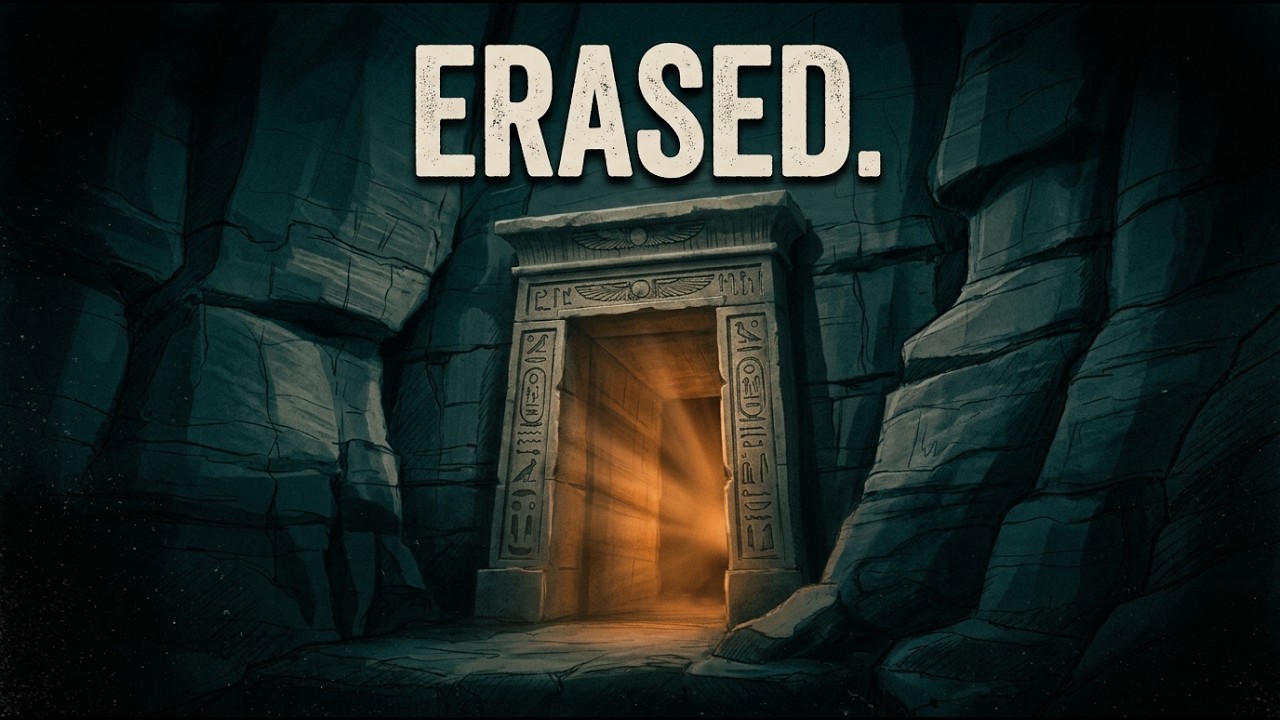



Explore the 1909 Arizona Gazette story of G.E. Kincaid's alleged discovery of a vast Grand Canyon underground city. This episode of Midnight Signals investigates claims of Smithsonian suppression, Egyptian connections, and Hopi legends surrounding this enigmatic subterranean world.
Key Takeaways
- In 1909, explorer G.E. Kincaid reportedly discovered a massive underground city within the Grand Canyon, complete with hieroglyphs and mummies.
- The Smithsonian allegedly excavated the site, but no findings were ever publicly disclosed, leading to theories of a deliberate cover-up.
- Hopi legends of the Sipapu and apparent Egyptian-style artifacts within the canyon offer intriguing parallels to Kincaid's alleged discovery.
- A specific area of the Grand Canyon linked to the alleged discovery remains a restricted federal zone, fueling ongoing mystery and speculation.
- The potential existence of such a pre-Columbian civilization challenges established historical and archaeological narratives.
The Grand Canyon Cover-Up: G.E. Kincaid’s Suppressed Subterranean City
In April 1909, the Arizona Gazette published a bombshell front-page story that sent shockwaves across the nation. Explorer G.E. Kincaid claimed to have stumbled upon an immense, ancient city hidden deep within the Grand Canyon, carved directly into the canyon walls. The incredible discovery was reportedly filled with artifacts bearing striking resemblances to Egyptian styles, including idols and hieroglyphs, alongside evidence of mummification. The narrative further intensified with the claim that the Smithsonian Institution dispatched a team to excavate this remarkable subterranean metropolis. However, following this initial flurry of excitement, the story abruptly vanished from public discourse, leaving a profound silence and fueling decades of speculation.
On this episode of Midnight Signals, host Russ Chamberlin embarks on a deep dive into this enduring enigma. We scrutinize the intriguing claims surrounding the Grand Canyon underground city, exploring the persistent theories of a massive archaeological cover-up. Chamberlin investigates the history of restricted zones within the canyon, delves into the rich tapestry of Hopi legends, particularly the concept of the Sipapu, and examines the documented geological and historical record of the Grand Canyon. The central question remains: is G.E. Kincaid’s alleged find the most significant suppressed archaeological discovery in American history, or was it an elaborate fabrication born from the sensationalist "yellow journalism" of the early 20th century?
The Alleged Discovery and Its Contents
According to the original 1909 report, G.E. Kincaid's exploration led him to a vast tunnel entrance within the Grand Canyon. This passage purportedly opened into a sprawling subterranean city, a marvel of ancient engineering. Kincaid described a complex network of structures carved from the rock, featuring wide corridors, numerous side chambers, and sophisticated granaries. The city was said to be capable of housing an estimated 50,000 people. Among the astonishing finds were weapons crafted from bronze and an unidentified gray metal, along with numerous mummified figures. The presence of Egyptian-style idols and hieroglyphs, alongside various place names in the Grand Canyon that reportedly reference Egyptian deities, adds another layer of mystery, hinting at potential connections to ancient Egyptian civilization or a shared, unknown ancient progenitor.
The Smithsonian's Role and Persistent Silence
The narrative takes a dramatic turn with the purported involvement of the Smithsonian Institution. Reports suggest that upon hearing of Kincaid's discovery, the Smithsonian swiftly organized an expedition to excavate the site. However, no official findings from this alleged excavation were ever made public. Over time, the Smithsonian has publicly denied any knowledge of G.E. Kincaid or the discovery itself, a stance that has become a cornerstone of the cover-up theory. This institutional denial, contrasted with the detailed newspaper account that went uncorrected for decades, raises serious questions about the suppression of information. Indeed, internal Smithsonian records from the late 19th and early 20th centuries reveal a practice of cataloging numerous fringe and anomalous finds, suggesting a history of acquiring but not always disseminating unusual discoveries.
Hopi Traditions and the Sipapu
Adding cultural depth to the mystery are the ancient legends of the Hopi people. Their oral traditions speak of a cataclysmic event in the distant past, during which their ancestors were guided by beings known as the "ant people" to seek refuge in a vast underground complex within the Grand Canyon. This subterranean refuge, known as the Sipapu, is described as a place of survival and a gateway to the current world. The parallels between these ancient Hopi myths and the narrative of a large, life-sustaining underground city discovered by Kincaid are striking, suggesting that the idea of a hidden civilization beneath the canyon might be woven into the very fabric of local indigenous lore.
The Theory of Suppression and Restricted Zones
The enduring mystery of the Grand Canyon underground city is fueled by several key factors. The initial detailed report in the Arizona Gazette, published on a prominent front page, never faced a retraction or correction for many years, leading many to believe the story held a kernel of truth. The theory posits that the discovery was deliberately suppressed rather than simply being a product of journalistic fabrication. Adding to the intrigue is the designation of a specific, remote section of the Grand Canyon—corresponding precisely to the area described by Kincaid—as a restricted federal zone. This area is off-limits to public access, with no hiking permits issued and no independent researchers granted entry. The National Park Service offers no public explanation for this continued closure, especially when other remote and challenging parts of the canyon are accessible with proper permits. This restricted access and the Smithsonian's denial create a potent atmosphere of secrecy.
Challenging the Narrative of American Prehistory
The potential implications of a sophisticated, pre-Columbian civilization with advanced knowledge of writing and metallurgy existing in North America are profound. Such a discovery would fundamentally challenge the widely accepted land bridge model of human migration and the subsequent development of civilizations on the continent. It complicates established historical timelines and narratives of discovery and colonization. The existence of an advanced, literate, architecturally sophisticated pre-Columbian civilization in the American Southwest doesn't just complicate the archaeology; it complicates the entire political and cultural story that was built upon the assumption that the Americas were a relatively undeveloped land before European arrival. What he found inside that tunnel is either the most suppressed archaeological discovery in American history, or the reason the world's most powerful scientific institution has spent over a century pretending a newspaper article never existed.
Navigating History and Mystery
Join Russ Chamberlin on Midnight Signals as we continue to explore the shadows of history and the unexplained. This episode, "The Grand Canyon Cover-Up: G.E. Kincaid’s Suppressed Subterranean City," delves into the evidence, the legends, and the persistent questions surrounding one of America's most enduring archaeological mysteries. Subscribe for your weekly dose of the unknown and join us in unraveling the secrets hidden within the Grand Canyon.
- (00:15) - Discovery in the Grand Canyon
- (00:29) - The Tunnel Entrance
- (03:23) - The Smithsonian's Silence
- (06:56) - Ancient Writings and Artifacts
- (10:08) - Hopi Traditions and Myths
- (11:04) - The Egyptian Connection
- (12:48) - The Smithsonian's Denial
- (15:23) - Restricted Access and Questions
- (17:58) - Rewriting History
- (20:40) - Conclusion: History Meets Mystery
Frequently Asked Questions
Did G.E. Kincaid discover an ancient underground city in the Grand Canyon?
In 1909, the Arizona Gazette published a story claiming explorer G.E. Kincaid found a vast underground city in the Grand Canyon, complete with Egyptian-like artifacts and hieroglyphs.
Why is the Grand Canyon area of Kincaid's alleged discovery restricted?
A section of the Grand Canyon corresponding to Kincaid's reported discovery is a restricted federal zone, with no public access or official explanation, intensifying speculation about suppression.
What is the connection between the Grand Canyon discovery and Egyptian legends?
Kincaid's account mentioned Egyptian-style idols and hieroglyphs, and some place names in the Grand Canyon have been linked to Egyptian deities, suggesting possible ancient connections.
What role do Hopi traditions play in the Grand Canyon underground city mystery?
Hopi legends describe ancestors being guided underground to the Sipapu for safety, which mirrors the idea of a large, subterranean complex, potentially linking them to the Kincaid discovery narrative.
Russ Chamberlin (0:02): October 1908. GE Kincaid is alone on the Colorado River, somewhere in the deepest stretch of the Grand Canyon, drifting through countries so remote that most people alive at that moment had never seen it and never would. Then something on the cliff face stops him. About 2,000 feet up, there's a stain in the rock. Not erosion, not a shadow shifting with the afternoon light.
Russ Chamberlin (0:26): Something cut into the sandstone by something that knew what it was doing. He ties off, climbs up, and finds a tunnel entrance facing due east, perfectly oriented, unmistakably man made. What he found inside that tunnel is either the most suppressed archaeological discovery in American history, or the reason the world's most powerful scientific institution has spent over a century pretending a newspaper article never existed. The story broke on 04/05/1909, on the front page of the Arizona Gazette. Not a small item, not a speculative sidebar.
Russ Chamberlin (1:03): Front page, several columns, packed with names, measurements, and logistical detail. That matters because hoaxes tend to be vague. This one wasn't. Kincaid was described as a career explorer with thirty years in Smithsonian funded expeditions, traveling solo down the Colorado River from Green River, Wyoming, in a small boat. He'd covered enormous distances alone before.
Russ Chamberlin (1:28): The trip itself wasn't what made the article remarkable. What made it remarkable was what he reported pulling himself up to find inside that canyon wall. The tunnel entrance opened into a passage that ran several 100 feet straight back into the rock, branching as it went into a network of side chambers. The entire complex had been carved from solid stone by people who understood how to move through solid rock and leave behind something that would last. The main corridor was wide enough to walk through without ducking, with a ceiling that rose well above head height, and the walls were covered in writing.
Russ Chamberlin (2:02): Not scratch symbols, not the kind of pictographs you find at surface sites across the Southwest. A formal, structured writing system that Kincaid recognized immediately as hieroglyphic in character. The rooms branching off the main passage held mummies, wrapped in dark fabric, sealed into crypts cut directly into the stone. There were granaries still holding grain, food stores that had sat untouched for what must have been centuries, possibly longer. There were weapons, copper, bronze, and one gray metal alloy Kincaid couldn't identify and the article couldn't name, because nobody at the time had a framework for what it might be.
Russ Chamberlin (2:42): And at the center of the complex, in a chamber that Kincaid described as functioning like both a throne room and a place of worship, there was a large idol. Seated cross legged, copper colored, with features and proportions that Kincaid said looked unmistakably Egyptian. His estimate for the total capacity of the complex, the number of people it could have housed and sustained, was 50,000. He sent over 700 photographs back to the Smithsonian along with the physical artifacts. The institution responded by dispatching a professor S.
Russ Chamberlin (3:15): A. Jordan with a team of 40 people to conduct a full excavation. And then, as far as the public record is concerned, nothing happened. No published findings, no museum display, no academic paper, no follow-up article, no acknowledgment that the expedition had taken place at all. The Arizona Gazette never issued a correction.
Russ Chamberlin (3:36): It never retracted the story, never labeled it fiction, never named it as satire. The article just sat there, specific and detailed and completely alone, while the institution it described quietly looked the other way. Before we start pulling at the thread of why it disappeared though, we need to sit with what Kincaid actually described inside those rooms, because the specificity of it doesn't read like someone making things up. The main corridor ran back into the canyon wall at a slight downward angle, wide enough that two people could walk side by side without brushing the walls. At regular intervals along its length, smaller passages broke off left and right, each one leading deeper into the rock, each one serving a distinct purpose.
Russ Chamberlin (4:22): This wasn't a cave system that people adapted and repurposed over generations. The layout had intention behind it, the kind of spatial logic you see in buildings designed by people who understood architecture as a discipline, not as a necessity. The side chambers divided roughly into categories. Some held the dead, others held food, others held things that don't fit neatly into either category. The crypts were cut directly into the stone walls, sealed off from the main passage, and inside each one sat a mummified figure wrapped in a fabric that had darkened with age.
Russ Chamberlin (4:59): Kincaid described them as well preserved, which, given the dry desert environment and the depth of the complex, isn't implausible. The conditions inside a sealed stone chamber at that depth would stay cool and dry for a very long time. The wrapping method had a deliberate quality to it, not a hasty burial, but a prepared one. The granaries held actual grain, not remnants, not traces, stored food. The quantity implied this wasn't a waste station or a temporary shelter.
Russ Chamberlin (5:32): People were meant to live here for extended periods, possibly indefinitely, and whoever built it thought seriously about feeding a large population for a long time underground. Then there were the weapons, copper and bronze artifacts, some of which were shaped into tools and some into armaments, all of them made through a metallurgical process that doesn't match anything documented in the archaeological record of indigenous North America. The bronze question matters more than it might seem, because true bronze, the copper tin alloy, requires sourcing and smelting two separate metals and combining them at specific temperatures. That's not improvised knowledge. And beyond the bronze, there was the gray metal nobody could identify.
Russ Chamberlin (6:15): Kincaid sent samples with the photographs. The Smithsonian received them. Nobody ever published an analysis. The idol at the center of the complex is the detail that tends to stop people. Seated cross legged on a raised platform in the largest chamber of the complex, it was copper colored and large, large enough that Kincaid singled it out as the focal point of the room.
Russ Chamberlin (6:37): The cross legged posture, the scale, the deliberate placement in a room that combined the functions of a court and a sanctuary these aren't incidental design choices. Whoever commissioned that idol understood symbolic power and intended the figure to communicate authority, whether divine or civic or both. The walls throughout the complex were covered in hieroglyphs, not scattered markings, not decorative scratching. Systematic inscription covering large sections of wall and many of the artifacts. A formal writing system applied with consistency across the entire site, which means whoever lived here wasn't just literate, they were producing written records at scale.
Russ Chamberlin (7:19): 700 photographs went to Washington. A 40 person team was dispatched to continue the dig. And if you search the Smithsonian's published output from 1909 onward, you'll find no mention of any of it. Not the site, not the artifacts, not the expedition, not the photographs, and not the two men whose names are on the original report. The photographs don't surface in any archive, the gray metal samples don't appear in any catalog, The mummies don't end up in any collection anyone can point to.
Russ Chamberlin (7:51): A site described in that level of detail, with that volume of physical evidence allegedly transferred to one of the world's largest research institutions, just stops existing in the record, and the question of who built it and where they came from doesn't get easier the longer you sit with what Kincaid described. Pull up a map of the Grand Canyon and look at the names of the formations along the northern stretches of the Kaibab Plateau. Isis Temple, Osiris Temple, Tower Of Ra, the Temple Of Set, Tower Of Set, Horus Temple. These aren't names attached to the canyon by conspiracy theorists after the nineteen o nine article ran. The National Park Service applied them, based on naming conventions that federal surveyors established in the late nineteenth and early twentieth centuries.
Russ Chamberlin (8:39): Men who were mapping terrain, not writing mythology. When a government cartographer looks at a rock formation and reaches for the name of an Egyptian deity, something prompted that association. Whether it was visual resemblance, local knowledge filtering up through intermediaries, or something they'd heard that never made it into the official record, the names are there and they predate the cover up theory by decades. That's not proof of anything on its own, but it sits uncomfortably alongside everything else. The Hopi people have lived in Northeastern Arizona for centuries, and their oral traditions carry something relevant here.
Russ Chamberlin (9:16): The ant people, as they're described in Hopi cosmology, sheltered the ancestors underground during a catastrophe that destroyed the world above. The ancestors didn't hide in a cave they stumbled into. They were guided there, taken in by beings who already lived beneath the earth, and sustained underground until the surface became habitable again. When the catastrophe passed, they emerged. The place they emerged from is called the Sipapu.
Russ Chamberlin (9:43): The Hopi locate the Sipapu inside the Grand Canyon. That's a tradition that was in place long before Kincaid floated down the Colorado. And it describes, in mythological language, exactly what a 50,000 person underground complex built to sustain life during a catastrophe would look like from the inside. A world beneath the world, guided by beings with knowledge the surface people didn't have, stocked for survival on a long timeline. You can dismiss that as coincidence.
Russ Chamberlin (10:11): A lot of people do. But the Hopi emergence tradition isn't describing a metaphor, it's describing a geography. Their sacred point of origin is physically located in Canyon where Kincaid claimed to find an underground city built for mass habitation. Those two things overlap in the same canyon, along the same river, and neither one was invented to support the other. The Egyptian connection raises a harder question than most people ask.
Russ Chamberlin (10:38): The lazy version of the argument is that Egyptians sailed to Arizona. Nobody serious is claiming that, and it doesn't hold up geographically or logistically anyway. The more uncomfortable version is this, What if the architectural and symbolic similarities between what Kincaid found and what we see in Egypt don't reflect contact between those two civilizations, but descent from the same earlier one? Egypt's dynastic period doesn't spring from nothing. It arrives with a fully developed writing system, a sophisticated theology, monumental construction methods, and astronomical knowledge already in place.
Russ Chamberlin (11:15): The accepted story treats this as a rapid local development. The alternative is that the knowledge came from somewhere earlier. A civilization that was already old when Egypt was young, that spread its architecture, its symbols, its writing, and its gods across multiple continents, and that the canyon complex is one node in a network we've only partially uncovered. The biblical framework actually fits this model cleanly. After the flood, the surviving population dispersed from a single origin point, carrying knowledge of construction, astronomy, written language, and organized religion outward across the Earth.
Russ Chamberlin (11:54): A subterranean complex of the scale Kincaid described, built to survive a catastrophe, stocked with food, equipped with a formal writing system, and oriented astronomically, doesn't contradict that framework. It fits inside it. The cultures we call Egyptian and the culture that built the canyon complex may both be downstream of the same source event, which is why their symbols and their architecture rhyme without the two civilizations ever meeting directly. The surveyors who mapped the canyon named its formations after Egyptian gods. The Hopi say their ancestors came out of the earth there, guided by beings who lived below.
Russ Chamberlin (12:30): And a career explorer with Smithsonian credentials described a city beneath the stone with an idol that looked Egyptian to him immediately, without hesitation. Three separate threads converging on the same stretch of canyon is not nothing. The Smithsonian's official position is simple. G. E.
Russ Chamberlin (12:47): Kincaid didn't exist, Professor. S. A. Jordan didn't exist, the site doesn't exist, and the artifacts were never received because there were none. Their own myth busting publication addresses it directly: Myth four: Debunked.
Russ Chamberlin (13:02): Case closed. The institution that manages 155,000,000 objects across 19 museums looked at the 1909 Arizona Gazette article and said flatly, that none of it happened. That would be easier to accept if their own behavior from the same era didn't complicate the denial. The Smithsonian's internal records from the late eighteen hundreds and early nineteen hundreds show an institution actively cataloging finds that mainstream archaeology today would consider fringe. Paleo Hebrew inscriptions on Ohio stones, reports of giant skeletal remains from burial mounds across the Midwest, anomalous artifacts from sites that didn't fit the approved sequence of North American habitation.
Russ Chamberlin (13:45): They weren't ignoring strange finds during this period. They were collecting them, tagging them, filing them, and in many cases, quietly setting them aside without publishing findings. The cover up theory applied to Kincaid isn't built on the assumption that the Smithsonian never acquires awkward material. It's built on the documented pattern of what happens to that material afterward. David Childress pushed the suppression angle into public circulation in the early 1990s, which is the point where critics tend to dismiss the whole thread.
Russ Chamberlin (14:16): If nobody mentioned a cover up until the 1990s, doesn't that mean the cover up theory was invented then? Not quite. Childress didn't invent the 1909 article. He didn't write the Arizona Gazette's front page or fabricate the names, measurements, and artifact descriptions in it. What he did was notice that a detailed, specific, front page news story from a legitimate regional paper had received zero institutional follow-up and zero formal denial for eighty years.
Russ Chamberlin (14:45): The article was always there. The silence around it was always there. He just started asking why. The Arizona Gazette never walked the story back. No correction ran, no editor's note appeared, no retraction was ever published.
Russ Chamberlin (15:00): That's worth sitting with, because newspapers of that era corrected themselves regularly when stories turned out to be fabricated. The paper ran the account as reported fact and left it standing. If the story was invented whole cloth by a bored reporter on a slow news day, as the debunkers suggest, the paper either never knew it was fiction or didn't care enough to say so publicly. Publicly. Neither explanation is particularly clean.
Russ Chamberlin (15:24): And then there's the access question, which cuts through a lot of the back and forth about archives and records and institutional memory. The stretch of the Grand Canyon that corresponds to the area Kincaid described as restricted federal zone. No hiking permits are issued for it, no independent researchers have been granted entry, and the National Park Service doesn't offer a public explanation for why that specific section remains off limits while other remote and equally rugged stretches of the canyon are open to permitted expeditions. Restricted zones exist throughout the National Park System for legitimate reasons. Ecological sensitivity, unstable terrain, active research.
Russ Chamberlin (16:04): But active research produces published findings, and no published findings have come out of this area. The restriction produces nothing visible except the restriction itself. The pattern here isn't a conspiracy theory requiring elaborate coordination. It's simpler than that. An article that was never corrected, artifacts that were allegedly received and never cataloged, an expedition that was reportedly dispatched and never reported on, and a physical location that remains inaccessible without explanation.
Russ Chamberlin (16:36): Each piece individually might mean nothing. Together, they point somewhere. The land bridge model is the spine of mainstream North American prehistory. The approved sequence goes like this. Nomadic hunters crossed from Siberia into Alaska sometime around thirteen thousand to fifteen thousand years ago, spread south and east across an empty continent, and gradually developed the cultures that European explorers eventually encountered.
Russ Chamberlin (17:02): No written language, no monumental architecture, no advanced metallurgy, a clean slow progression from primitive to complex with nothing interrupting the arc. A 50,000 person underground city doesn't fit that sequence. It doesn't bend the model slightly or require a minor revision. It breaks the model's core assumption, which is that organized, literate, architecturally sophisticated civilization in North America didn't exist before a certain date. Bronze working, formal hieroglyphic writing, and a city engineered to house tens of thousands of people underground don't appear in a culture that's still in the early stages of social organization.
Russ Chamberlin (17:42): They appear at the end of a very long development, or they appear as inherited knowledge from something older. Either answer rewrites the textbook. What makes that rewrite so threatening to the institutional version of history isn't just the timeline, it's what the timeline protects. The land bridge model implicitly frames the Americas as a blank slate, a continent without deep civilization until contact with Europe, which made colonization easier to frame as development rather than destruction. An advanced, literate, architecturally sophisticated pre Columbian civilization in the American Southwest doesn't just complicate the archaeology, it complicates the entire political and cultural story that was built on top of it.
Russ Chamberlin (18:29): The biblical dispersal model absorbs all of this without strain. A single advanced civilization, wiped out or scattered by a global catastrophe, rebuilding in multiple locations simultaneously and carrying the same core knowledge with them. That's why the architecture rhymes. That's why the writing systems rhyme. That's why the theological symbols rhyme across cultures that supposedly had no contact with each other.
Russ Chamberlin (18:55): The Canyon Complex, if real, is one of those rebuilding points. And the people who built it were working from the same inherited knowledge base as the civilization that raised Egypt's earliest structures. The Egyptian names on those canyon formations weren't applied by accident. Federal surveyors in the late nineteenth century were methodical, precise people documenting terrain for land management purposes. When they named a rock tower after Ra and a plateau after ISIS, they weren't being poetic.
Russ Chamberlin (19:24): Something about what they saw or what they were told made those names the obvious choices. That record is sitting in plain sight on every map of the canyon, and nobody in an official capacity has ever explained why those names were chosen. The restricted zone is still restricted. No permit process exists for the area Kincaid described. No researcher has published findings from inside it.
Russ Chamberlin (19:48): That absence isn't neutral. It's a sustained, active condition, maintained year after year, that prevents the one thing that would settle this: someone going to look. The 1909 article was never corrected. The canyon landmarks still carry the names of Egyptian gods. The restricted zone has stayed restricted for over a century without a public explanation.
Russ Chamberlin (20:12): Every piece of physical evidence that would confirm or disprove this story, the July photographs, the gray metal samples, the mummies, the artifacts, went to Washington and vanished from the record. That's not how institutions handle embarrassing fabrications. Fabrications get corrected, mocked, and forgotten. What doesn't get corrected, what gets sealed off and left inaccessible decade after decade, is something else entirely. This has been Midnight Signals.
Russ Chamberlin (20:43): I'm Russ Chamberlain, guiding you through the shadows where history meets mystery. Visit midnightsignals.net to continue the conversation, explore more episodes, and say hello. If you enjoyed tonight's journey, please like, subscribe and share the show to help more listeners find midnight signals. Until next time, stay vigilant, seek the hidden and remember in every silence there is a signal and in every signal, a story waiting to be told.
