The Bridgewater Triangle: Inside America’s Most Cursed 200 Square Miles
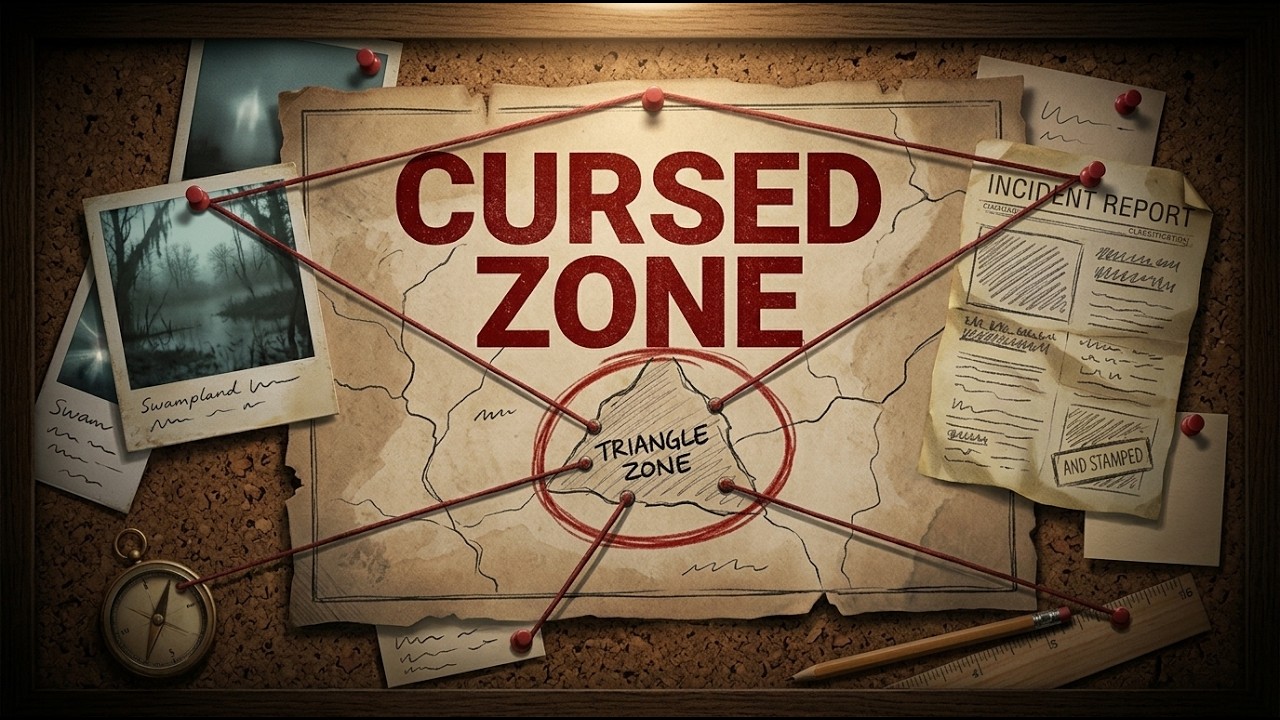



Explore the chilling Bridgewater Triangle paranormal hotspot, a 200-square-mile region in Massachusetts steeped in centuries of unexplained phenomena. From Hockomock Swamp's spiritual weight to Freetown State Forest's oppressive atmosphere, discover the history of strange lights, mysterious creatures, and UFO sightings that define this cursed landscape.
Key Takeaways
- The Bridgewater Triangle is a 200-square-mile area in southeastern Massachusetts renowned for an unusual concentration of diverse paranormal activity.
- Hockomock Swamp is considered the spiritual heart of the Triangle, with its history intertwined with violence and indigenous traditions that contribute to its lingering atmosphere.
- The region's notoriety grew in the 1970s when investigators recognized a pattern of overlapping phenomena, including cryptid sightings, UFOs, and hauntings.
- Reports of large, hairy bipeds, giant birds, and even UFOs date back centuries, suggesting the phenomena are not solely modern occurrences.
- Theories suggest the Triangle's power stems from spiritually charged land, historical trauma, or even unique geological properties that amplify unexplained events.
The Bridgewater Triangle: Inside America’s Most Cursed 200 Square Miles
Welcome to Midnight Signals, where tonight we venture into a region notorious for its paranormal intensity. The Bridgewater Triangle, a roughly 200-square-mile area in southeastern Massachusetts, stands as a concentrated nexus for nearly every kind of unexplained phenomenon imaginable. Defined loosely between towns like Abington, Rehoboth, and Freetown, this locale has become a magnet for tales of the strange, drawing in researchers and curious minds for decades.
From the murky, foreboding waters of Hockomock Swamp to the dense, oppressive treelines of Freetown State Forest, the Bridgewater Triangle has a history steeped in generations of unsettling reports. These accounts detail everything from enigmatic strange lights dancing in the night sky to elusive hairy bipedal creatures and sightings of colossal birds. What sets this region apart is that these extraordinary claims are not confined to local folklore; they include documented sightings by law enforcement officers and everyday residents that stretch back centuries.
The sheer variety and density of paranormal activity reported within the Bridgewater Triangle suggest something far more profound than a mere collection of isolated ghost stories. It hints that the landscape itself may be a foundational element for phenomena that are ancient, deeply unsettling, and far more complex than we currently understand. The history of this land is inextricably linked to the profound violence and sacred traditions of its past, imbuing the area with a heavy, palpable atmosphere that many visitors feel acutely upon arrival.
Hockomock Swamp: The Heart of the Phenomenon
At the epicenter of the Bridgewater Triangle lies Hockomock Swamp. This vast freshwater basin, the largest in Massachusetts, has long been recognized not just as a challenging natural landscape, but as a place where, according to indigenous understanding, spirits dwell. This ancient perception predates modern paranormal interpretations, suggesting a spiritual significance to the swamp that modern phenomena seem to echo.
The land's history is deeply scarred by the violence of King Philip's War, with Hockomock Swamp serving as a critical refuge for Native American communities. The immense loss, destruction, and trauma experienced by indigenous peoples during this conflict have left an undeniable spiritual and emotional weight upon the area. It is easy to understand why generations of people walking into this swamp might feel that something had never truly settled there, a lingering echo of historical pain.
The Naming and Nature of the Triangle
The term "Bridgewater Triangle" itself is a relatively modern construct, coined in the 1970s by cryptozoologist Lauren Coleman. Before this, reports of strange occurrences were often treated as isolated incidents. However, investigators began mapping these accounts and noticed a distinct pattern of clustered activity, leading to the formal recognition of the region as a unique zone of paranormal significance. It was the overlapping and compounding nature of these diverse reports—ghosts, cryptids, UFOs, and more—all concentrated within the same geography, that gave the region its enduring mystique.
Creatures, Lights, and UFOs: A Tapestry of the Unexplained
The Bridgewater Triangle is a hotspot for cryptid sightings. Reports include encounters with large, hairy bipeds, often described as moving on all fours or running upright. One notable incident from West Bridgewater involved a woman witnessing a "huge, hairy creature eating a pumpkin" in her garden. Further expanding the bestiary of the Triangle, a 1971 report from Norton detailed a police sergeant encountering what he initially mistook for a bird, only to realize it was a colossal creature with an estimated 8-to-12-foot wingspan, leaving behind enormous three-toed footprints.
Beyond terrestrial creatures, the skies over the Bridgewater Triangle have long been a theater for unexplained aerial phenomena. UFO sightings in the region date back at least to 1760, showcasing that the strangeness is not a modern invention. Documented reports include everything from mysterious balls of light and landed craft to unusual triangular vehicles, with accounts provided by both civilians and law enforcement, proving that the fascination with UFOs in the area transcends eras.
Freetown State Forest and Theories of Power
Contributing a distinct intensity to the region's reputation is Freetown State Forest. Visitors often describe an oppressive atmosphere, a pervasive feeling of being watched and unwelcome. This feeling is attributed to a complex layering of paranormal activity, historical criminal occurrences, and the lingering echoes of human violence and struggle.
Numerous theories attempt to explain the persistent, diverse strangeness of the Bridgewater Triangle. Some posit that the land itself is inherently sacred or perhaps spiritually damaged, burdened by the historical mistreatment of indigenous peoples. Others explore more speculative ideas, such as geological anomalies that might amplify energy fields. However, the most compelling evidence often cited is the consistent, overlapping pattern of reports across generations, suggesting a unified, albeit mysterious, source for the phenomena.
Ultimately, the Bridgewater Triangle challenges our understanding of reality and history. Whether viewed as a spiritual crossroads, a physical vortex, or simply a disturbed landscape wearing different faces, the consistent stream of unexplained events suggests a profound and enduring mystery. Is it merely legend, or is it a warning from a place where the veil between worlds is perpetually thin?
- 00:09 - The Bridgewater Triangle Unveiled
- 01:34 - Hockomock Swamp: Heart of the Triangle
- 02:21 - A History of Violence and Resistance
- 03:55 - The Birth of the Triangle Name
- 05:22 - The Density of Strange Reports
- 06:51 - Creatures of the Triangle
- 10:49 - UFOs: A Sky of Mystery
- 14:34 - Freetown State Forest's Dark Reputation
- 17:07 - Theories Behind the Triangle's Power
- 19:06 - The Triangle: Legend or Warning?
Frequently Asked Questions
What defines the Bridgewater Triangle?
The Bridgewater Triangle is a roughly 200-square-mile region in southeastern Massachusetts, generally situated between Abington, Rehoboth, and Freetown, known for a high density of paranormal and unexplained phenomena.
What historical events contribute to the Bridgewater Triangle's paranormal reputation?
The area's history, particularly King Philip's War and the associated violence and loss experienced by native communities in places like Hockomock Swamp, is believed to have left a spiritual and emotional weight on the land.
What types of creatures have been reported in the Bridgewater Triangle?
Reports include sightings of large, hairy bipeds, giant birds with significant wingspans, and potentially other cryptid or unexplained animal encounters.
When did the Bridgewater Triangle gain its name and recognition?
The term 'Bridgewater Triangle' was coined in the 1970s by cryptozoologist Lauren Coleman, who began mapping the numerous, overlapping reports of strange phenomena within the region.
What theories explain the Bridgewater Triangle's paranormal activity?
Explanations range from the land being inherently sacred or spiritually damaged, to the lingering effects of historical trauma, and even speculative ideas about geological energy amplification.
Russ Chamberlin (0:02): This isn't one ghost story, and it isn't one monster, and it isn't one bad stretch of road where people get jumpy after dark. The Bridgewater Triangle is a whole region, around 200 square miles in Southeastern Massachusetts, usually marked out between Abington, Rehoboth, and Freetown. Inside that space, people have reported just about every kind of thing you'd normally keep in separate folders. Lights in the sky, hairy creatures in the swamp, giant birds over the road, haunted woods, strange animals that don't belong there. And all of it keeps piling up in the same patch of land.
Russ Chamberlin (0:39): What makes this place hard to brush off is the range of it, but also the time span. These stories don't come from one summer or one newspaper scare. They stretch across generations and some of the witnesses were ordinary locals, while others were police officers looking straight at something they couldn't explain. To understand why this place has held onto its reputation for so long, it helps to start before the sightings people know best. Long before the triangle had a name, the land already did.
Russ Chamberlin (1:08): At the center of all of this is Hakamok Swamp. If the Bridgewater Triangle has a heart, that's it. It's the largest freshwater basin in Massachusetts, a huge wet stretch of dark water, brush, mud, and woods that has shaped the feeling of this whole region for centuries. Even without any stories attached to it, it's the kind of place that feels older than the roads around it. It swallows sound.
Russ Chamberlin (1:33): It changes the light. It makes everything around it feel a little cut off. The name matters too. Hakamok has been understood as the place where spirits dwell. That idea didn't get pasted onto the swamp later by paranormal books.
Russ Chamberlin (1:48): It was already part of how the land was understood. With that in mind, a lot of what came later feels less like random folklore and more like a reputation growing out of something much older. That older history is brutal. During King Philip's War in 1675 and 1676, this swamp became a final refuge for Metacom, also known as King Philip, and his warriors as colonial forces closed in. The war itself was catastrophic across New England, but for native communities it was especially devastating.
Russ Chamberlin (2:21): Settlements were burned, families were shattered, thousands of native men, women, and children were killed or forced into slavery and sent away. By the end of it, whole lives and whole worlds had been broken apart. So when people say this land feels heavy, that idea doesn't come out of nowhere. They're talking about a place tied to resistance, death, and loss on a massive scale. A place already understood as spiritually charged, then marked by extraordinary violence.
Russ Chamberlin (2:49): It's easy to see why generations of people would walk into this swamp and feel like something had never really settled there. And that's the important part. The later stories about strange creatures, lights, hauntings, and voices in the woods didn't appear on blank ground. They rose in a place that already carried sacred meaning, fear, grief, and the sense that the natural world there was not entirely ordinary. The swamp wasn't just scenery for the legend, it was the foundation.
Russ Chamberlin (3:18): That helps explain why the Bridgewater Triangle developed the way it did. In a lot of places, one local story becomes the defining story. Here, the stories multiplied. New reports didn't replace older beliefs, they stacked on top of them sacred ground, war ground, ghost ground, creature ground all of it layered in one region until the area stopped feeling like a collection of separate mysteries, and started feeling like one unsettled zone. Seen that way, the modern reports stop seeming scattered.
Russ Chamberlin (3:49): They start to look like different expressions of the same place. That's where the Bridgewater Triangle begins to take shape. The name Bridgewater Triangle didn't come from old colonial maps or some ancient warning scratched into stone. It took shape in the 1970s, when investigators, specifically cryptozoologist Lauren Coleman, who coined the term, started looking at the region not as a set of isolated weird stories, but as a pattern. Instead of treating each sighting like its own little legend, they started mapping where things were happening and noticed that the same cluster of towns and wild areas kept coming up.
Russ Chamberlin (4:26): That's when the triangle really became a thing people could point to, define, and talk about as one zone. The boundaries usually settle around Abington, Rehoboth, and Freetown, creating that now familiar 200 square mile region in Southeastern Massachusetts. Inside those lines are the places that come up again and again. Hockamac Swamp sits at the center. Freetown State Forest carries its own dark reputation.
Russ Chamberlin (4:54): The Taunton River winds through the area like another old corridor of stories. Dighton Rock adds one more layer of mystery, because even the landmarks here seem to come with questions attached. Then you have the roads, neighborhoods and stretches of town where people have kept seeing things they don't know how to place. What made the Triangle different from other haunted areas was never just one category of activity. It wasn't known only for ghosts, or only for creatures, or only for strange lights.
Russ Chamberlin (5:22): It was all of it at once, all stacked into the same geography. That's what gave the region its pull. If one town has a haunting and another has a monster story, that's interesting. But when one connected map starts producing UFO reports, cryptid encounters, haunted locations, bizarre animal sightings, and repeated stories from locals and police. It starts to feel like something more concentrated is happening there.
Russ Chamberlin (5:49): And the timeline only made that feeling stronger. UFO reports in the region reach back much farther than most people expect. The earliest documented sighting is from 1760, then more reports show up later, including one recorded in 1908. By the time the modern triangle was being named in the 1970s, there was already this long history sitting behind it, like the area had been generating impossible stories for centuries before anyone gave the pattern a label. So the triangle didn't become famous because one perfect case proved anything.
Russ Chamberlin (6:23): It became famous because the reports kept crossing categories and piling into the same space. Lights in the sky, creatures in the marsh, hauntings in the woods, strange animals where they shouldn't be. The map itself became the story, and that's the angle that makes this place so compelling. It makes more sense to look at the Bridgewater Triangle as one compressed high strangeness zone than as a bunch of separate legends that just happen to touch each other. Here, the categories blur.
Russ Chamberlin (6:51): A swamp sighting affects how people hear a UFO report. A haunted road changes how they read a creature encounter. Each story strengthens the next one. That overlap shows up especially clearly in the creature cases. By 1970, Hockomock Swamp was already carrying that old reputation, and then it started producing reports that sounded less like ghost stories and more like something wild had stepped out of the brush and into people's lives.
Russ Chamberlin (7:18): That year, residents around the swamp began describing a large hairy creature, around seven feet tall, moving through yards and along the edges of neighborhoods. What made the report stand out was the way people described its movement. Sometimes it was said to be on all fours, low and fast like an animal. Other times it was upright, running on two legs. At first people tried to fit it into a normal explanation.
Russ Chamberlin (7:44): The obvious guess was a bear. That made enough sense that local and state police treated it seriously and went looking for one. They searched the area expecting to find a large animal that had wandered too close to homes. But no bear turned up. No captured animal, no clean answer, nothing that settled the wave of sightings.
Russ Chamberlin (8:04): One of the strangest reports came on 04/08/1970. Two police officers were parked in a cruiser at the edge of Hockamock Swamp when something hit them from behind in a way that was impossible to ignore. The rear of the car was suddenly lifted into the air, then slammed back down with a loud drop. The officers turned the cruiser and put a spotlight on the area behind them. In that beam, they saw what they described as a huge hairy figure running on two legs behind a nearby house.
Russ Chamberlin (8:34): Again, a serious search followed, and again, nothing was found. That case matters because it helped move the story out of rumor territory. These weren't kids trying to scare each other. These were officers sitting in a patrol car, reacting in real time to something physical, then seeing a figure they couldn't explain. Even stripped of every supernatural idea, the report still doesn't fit neatly.
Russ Chamberlin (8:59): Another account from that same year pushed the story further into local memory. In West Bridgewater, a woman heard a noise in her garden and looked out to see a huge, hairy creature eating a pumpkin. It wasn't lurking in the distance or vanishing into fog. It was right there in the yard. She reported that it grunted at her, then ran off upright, carrying the pumpkin with it.
Russ Chamberlin (9:20): It's a weird image, almost ordinary in a way, and that's part of why it sticks. The details feel too specific to sound polished. Then in 1971, the region added another kind of creature to the pile. Norton Police Sergeant Thomas Downey was driving home when he saw something at the roadside near the swamp. At first it looked like a bird, but the scale was wrong immediately.
Russ Chamberlin (9:44): The thing stood over six feet tall. Then it launched straight up into the air, showing what was estimated as an eight to 12 foot wingspan. Other officers came out afterward and found large three toed footprints, but no animal. That sighting became one of the Triangle's defining cases because it widened the range of what people thought might be moving through this area. Now it wasn't just hairy man like creatures, it was giant birds too, and locals connected that report to Bird Hill and to older thunderbird traditions tied to the region.
Russ Chamberlin (10:18): After that, the creature side of the triangle never really narrowed back down. Stories kept circulating about Bigfoot type figures, strange animals that didn't belong in the area, and smaller legendary beings like Pukwudjis. On paper, those sound like totally different categories. But inside the triangle, they don't stay separate for long. They start to feel like part of the same living ecosystem of reports, where the land keeps producing forms that are close enough to recognize and wrong enough to unsettle people.
Russ Chamberlin (10:49): And once a place starts giving you things on the ground that shouldn't be there, it almost feels natural that the sky would join in too. The UFO side of the Bridgewater Triangle matters for one big reason. It shows that this region was never just a swamp monster story that kept growing extra details over time. Reports of strange things in the sky run through the area across completely different eras, long before the internet, long before cable paranormal shows, and long before most people had ever heard the phrase Bridgewater Triangle. That gives the whole map a different kind of weight, because now the strangeness isn't staying on the ground.
Russ Chamberlin (11:27): The earliest documented sighting tied to the area goes back to 1760. That's important on its own, because it pushes the timeline way past modern UFO culture and drops it into a period where people had a very different vocabulary for what they were seeing. Then another report appears in 1908, showing the pattern didn't belong to one century or one passing scare. It kept resurfacing. By 1968, the reports sound more familiar to modern ears.
Russ Chamberlin (11:57): In Rehoboth, five people describe seeing a strange ball of light floating above the trees. It's a simple case on paper, but simple isn't the same as weak. A glowing object over the tree line, seen by multiple witnesses fits the kind of account that keeps repeating in flap areas all over the country, and here it lands inside a place that was already carrying older stories, older warnings, and older unease. Then in 1976, the region got one of its better known roadway UFO reports. Two objects were said to have landed along Route 44 near Taunton.
Russ Chamberlin (12:34): That detail matters because a landing claim changes the mood of a sighting. A light overhead is one thing. Something coming down close to the road, close to where people live and drive, feels much more invasive. It brings the phenomenon into everyday space the same way the swamp creature cases did. The pattern kept going.
Russ Chamberlin (12:54): In 1994, a law enforcement officer reported seeing a triangular craft marked by red and white lights. Skeptics will rightly point out that once a region earns a reputation for the paranormal, confirmation bias takes hold. Every misidentified aircraft, strange shadow, or trick of the light suddenly gets folded into the legend. You can dismiss one person. You can explain away a bad angle, bad weather, nerves, or misidentification.
Russ Chamberlin (13:24): But when the witness is someone trained to observe, and when the report joins a long chain of similar claims in the same region, it gets harder to wave off as just another mistake. Then in the summer of nineteen ninety nine, another UFO report surfaced near Lake Nipponnikit, and the attention didn't stop there. Into the 2000s and beyond, the Triangle kept drawing investigators, documentaries, and fresh testimony from people who believed they'd seen something they couldn't reduce to aircraft, stars, or rumor. Specific modern cases can be harder to pin down in clean public records, but the stream never really dries up. The area keeps pulling these stories in.
Russ Chamberlin (14:05): That's really the value of the UFO history here. Not that one single report proves what's happening, but that the triangle keeps producing more than one kind of impossible event. A haunted forest is one thing. A cryptid swamp is another. But when the same region gives giant birds, hairy creatures, floating lights, triangular craft, and witness accounts spread over centuries, the whole place starts to feel less like a bundle of legends and more like a pressure zone.
Russ Chamberlin (14:35): And when you leave the sky and step back onto the ground, that pressure gets heavier in a different way. Because one part of the triangle doesn't just have sightings, it has a mood people talk about before they ever tell a story. Freetown State Forest is where the Bridgewater Triangle shifts from strange to oppressive. Hockomock Swamp gives you movement, mystery, and old stories rising out of the landscape. Freetown gives you something denser.
Russ Chamberlin (15:01): People talk about it like the air itself feels crowded. Even before anyone gets into hauntings or local legends, the forest has a reputation for making visitors feel watched, unwelcome, and wrong footed, like the place is pushing back. A lot of that comes from accumulation. The Triangle's reputation isn't built only on sightings of things outside the human world. It's also shaped by the idea that human violence left its own stain here.
Russ Chamberlin (15:28): Around Freetown, stories of hauntings and poltergeist activity mixed with the broader dread attached to former institutions, criminal history, and old murder lore folded into the region's identity. The point is the layering. Every dark story adds another weight to the woods. That's why Freetown matters so much to the Triangle as a whole. It reinforces the sense that this isn't just a monster map or a UFO corridor.
Russ Chamberlin (15:54): It's a place where reports of the supernatural and the memory of human evil seem to sit right on top of each other. In some locations, people talk about ghosts because something tragic happened there. In others, people report creatures or lights with no human history attached. Here, those threads tangle together until the categories stop feeling clean. And that's probably the best way to understand the forest's role in the larger legend.
Russ Chamberlin (16:19): Freetown State Forest doesn't just contribute a few extra scary stories, it deepens the emotional texture of the whole region. It makes the triangle feel inhabited in more than one sense. Not simply haunted by one event or one spirit, but crowded with residue and the aftermath of different kinds of damage sharing the same ground. That's also why the area stays with people. Even when the details of a specific case get fuzzy, the feeling doesn't.
Russ Chamberlin (16:46): People remember the pressure of the place. The sense that whatever is wrong there isn't isolated. It's spread out, embedded, more like connected spaces feeding the same atmosphere than separate hotspots. By the time you reach that point, the question shifts. It stops being whether one sighting can be explained away and become something bigger.
Russ Chamberlin (17:07): Why does one region keep collecting every kind of story people tell when a place feels broken, sacred, hunted, or alive in the wrong way? So why here? Why do so many kinds of reports keep sticking to the same 200 square miles? Believers usually come back to a few connected ideas. The first is that this was never ordinary land to begin with.
Russ Chamberlin (17:32): It was sacred ground, then war ground, then ground marked by colonial violence and loss. From that view, the triangle isn't random at all. It's a place where spiritual damage never cleared. That leads into the curse idea people still talk about, that the region's unrest is tied to the mistreatment of native people and the desecration of land that already carried meaning long before settlers arrived. Some people add a more physical explanation and point to courts in the area, suggesting the landscape might somehow amplify strange energy.
Russ Chamberlin (18:05): That's speculative, And even most people drawn to the triangle don't need it to make the point. The stronger argument is simpler. Decades of witness testimony matter. Not because every report has to be true in exactly the way it was told, but because the same kinds of experiences keep showing up in the same place across generations. People separated by time and circumstance still describe a region where categories break down.
Russ Chamberlin (18:30): And maybe that's the real key to the Bridgewater Triangle. Not ghosts over here, UFOs over there, and cryptids somewhere else, but one disturbed landscape wearing different faces. A light in the trees, a shape in the road, a presence in the woods, different forms, same pressure. That's what keeps the Bridgewater Triangle alive in people's minds. 200 square miles holding swamp, forest, old war ground, strange lights, giant birds, hairy creatures, and a feeling that the land itself remembers more than it should.
Russ Chamberlin (19:06): It lasts because it doesn't feel invented. It feels inherited. Like each generation steps into the same region and adds one more story to something already waiting there. Whatever crossed those roads, moved through that swamp, and hovered over those trees, it never seems fully gone. And that's why the triangle still feels less like a legend than a warning.
Russ Chamberlin (19:29): This has been Midnight Signals. I'm Russ Chamberlain, guiding you through the shadows where history meets mystery. Visit midnightsignals.net to continue the conversation, explore more episodes, and say hello. If you enjoyed tonight's journey, please like, subscribe, and share the show to help more listeners find Midnight Signals. Until next time, stay vigilant, seek the hidden, and remember in every silence there is a signal, and in every signal, a story waiting to be told.
