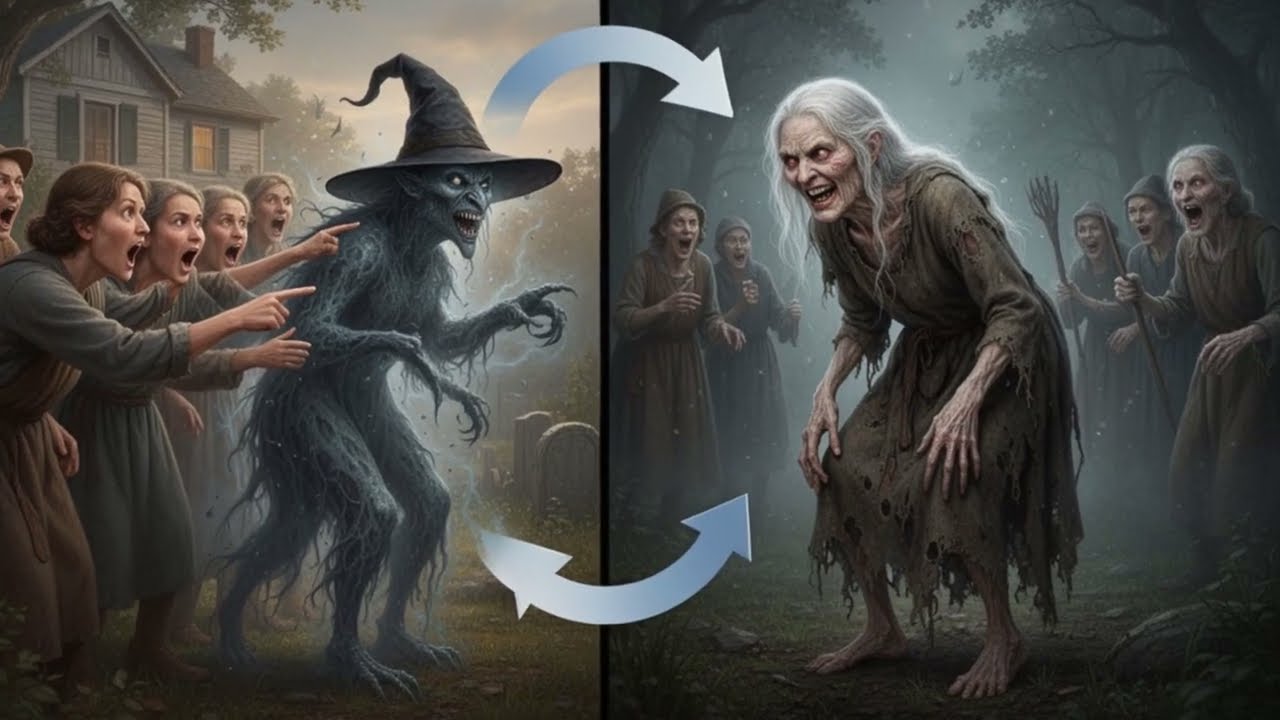
Hannah Cranna's Coffin Resistance: A Witch's Final Grip on Monroe
Even in death, Hannah Cranna’s will proved unbreakable. Her final command for her burial, explicitly rejecting conventional methods, led to a posthumous struggle. Discover how her coffin's resistance became a legend, forcing Monroe to confront its deepest fears and the true nature of Hannah's power.
Key Takeaways
- Hannah Cranna’s deathbed instructions for her burial were specific: no hearse, no sled, and her coffin carried by hand after dark.
- The townsmen attempted to circumvent these wishes by chaining her coffin to a sled, only for it to break free twice.
- This resistance demonstrated Hannah Cranna's continued influence and control over the community even after her death.
- The townsmen were ultimately forced to comply with her wishes, carrying the coffin by hand, a profound symbol of her enduring power.
- The legend of her coffin's resistance highlights the community's deep-seated fear and the psychological hold Hannah Cranna maintained.
The Final Command: A Challenge to Convention
The legend of Hannah Cranna, the woman feared as the "Witch of Monroe," is steeped in tales of psychological manipulation and an unnerving command over her community. While her life was marked by the fear she instilled, it was her death that cemented her place in local folklore, not through curses or hexes, but through an astonishing act of posthumous defiance. On her deathbed, Hannah dictated a final, peculiar set of instructions for her own burial. She explicitly forbade the use of a hearse or a sled, insisting that her coffin be carried by hand, and only under the shroud of darkness. This was not a mere eccentric whim; it was a calculated final move, a last opportunity to assert dominance over a town that had lived in her shadow for so long.
For the townsmen of Monroe, this dying wish presented a significant dilemma. They had spent years appeasing Hannah, driven by a pervasive fear of her retribution. Whether it was spoiled dairy, blighted crops, or unexplained livestock deaths, Hannah’s influence was omnipresent. Now, faced with her final command, they grappled with the prospect of honoring her wishes—a task that seemed both daunting and fraught with spiritual peril. The idea of manually carrying the coffin of a woman they believed to be a witch, in the dead of night, was a proposition that tested their resolve and their deeply ingrained superstitions. Yet, the consequences of defying her, given her demonstrated power throughout her life, seemed even more catastrophic.
The Sled Incident: Resistance Manifests
The initial impulse of the men of Monroe, perhaps a mix of defiance and a desperate hope that death would finally break Hannah’s hold, was to circumvent her specific burial instructions. They chose to use a sled, a practical if unceremonious method for transporting a body, especially in the harsh New England climate. The intention was clear: to get the task done as quickly and with as little fuss as possible, a stark contrast to the somber, respectful procession Hannah had demanded. They attached her coffin, the vessel containing the source of their long-held dread, securely to a sled, presumably intending to drag it through the snow to its final resting place. This act, born out of a desire to reclaim control and perhaps a lingering disbelief in the supernatural, was the first mistake.
As the sled began to move, something extraordinary, and terrifying, occurred. The coffin, rather than being passively transported, seemed to develop a will of its own. Accounts vary on the exact nature of its struggle, but the core of the legend is consistent: the coffin violently resisted its placement on the sled. It lurched, it thrashed, and in a moment that surely sent shivers down the spines of the men involved, the chains binding it snapped, and the coffin broke free. This was not the behavior of inanimate wood and metal. It was a powerful, undeniable manifestation of Hannah Cranna's influence extending beyond the grave, a clear signal that her wishes were not to be trifled with.
A Second Attempt and Ultimate Capitulation
For a community already steeped in superstition and accustomed to Hannah's uncanny power, this first incident would have been enough to heed her warning. However, the collective fear and perhaps a stubborn refusal to be dictated to by a dead woman prompted a second, more determined attempt. The townsmen, unwilling to fully concede, re-secured the coffin to the sled. This time, they might have reinforced the bindings, perhaps added more men, believing that brute force and extra precautions would overcome the seemingly supernatural resistance. They were, however, profoundly mistaken. The narrative insists that the second attempt proved even more futile, and perhaps more terrifying, than the first. The coffin’s struggle was again described as violent and unyielding, culminating in another escape. The chains, or whatever held it fast, failed once more, leaving the townsmen stunned and defeated.
At this point, the psychological grip Hannah Cranna held over Monroe reached its zenith. The repeated, undeniable resistance of her coffin served as irrefutable proof that her power was not diminished by death. The townsmen were faced with a stark choice: continue to fight a battle against a force they could not comprehend, or finally yield to her final command. The fear of what might happen if they persisted—whether it involved further supernatural occurrences, more dire consequences for their livelihoods, or simply the unbearable terror of facing such an anomaly—was overwhelming. They ultimately capitulated, accepting the arduous task of carrying the coffin by hand, in the dark, exactly as she had dictated. This act of carrying her weight on their shoulders, under the cloak of night, was a profound and humbling submission, a testament to the enduring and terrifying power of Hannah Cranna's will.
The Legacy of Coffin Resistance
The story of Hannah Cranna’s coffin resistance is more than just a spooky tale; it’s a deep dive into the psychological landscape of a community under the influence of perceived witchcraft. The events surrounding her burial highlight how fear can shape reality, leading people to interpret natural or even coincidental events through a supernatural lens. The townsmen’s actions, from their initial defiance to their ultimate surrender, demonstrate a collective psyche grappling with the unknown and the power of suggestion. Hannah Cranna, whether she possessed genuine supernatural abilities or was simply a masterful manipulator of fear, succeeded in controlling her community even in her final moments. Her legend of coffin resistance served as a potent final act, ensuring that her name and the unease she inspired would be etched into the very fabric of Monroe's history. The story continues to resonate, reminding us that sometimes, the greatest power lies not in curses, but in the human capacity for belief and the fear it breeds.
To delve deeper into the chilling tales of Connecticut's folklore and the mysteries surrounding figures like Hannah Cranna, listen to the full episode of Midnight Signals: "50 States of Folklore - Connecticut: Hannah Cranna, The Witch of Monroe." Click here to listen now.
Frequently Asked Questions
What were Hannah Cranna's specific burial instructions?
Hannah Cranna explicitly instructed that her coffin not be transported by hearse or sled, but carried by hand only after dark.
Why did the townsmen initially try to use a sled?
The townsmen likely attempted to use a sled to circumvent Hannah's wishes, perhaps out of a mix of defiance, practicality, or a desperate hope that death would break her perceived hold over them.
What happened when the townsmen tried to use a sled?
According to legend, the coffin resisted the sled, breaking free twice, even when secured by chains, forcing the townsmen to comply with her hand-carried burial.
What does the coffin's resistance symbolize?
The coffin's resistance is seen as a powerful symbol of Hannah Cranna's enduring will and control over the community, even after her death, and a manifestation of the deep-seated fear she inspired.